
Greek cuisine
The lighter Aubergine bake
This recipe is dedicated to Denise, an extraordinary lady, working at the PDSA in Cardiff.
If you are looking for a simple and light recipe that satisfies your winter cravings in a guilt free manner, I think you are at the right blog.
Our household is on a health buzz this January, probably like you are, and we feel a lot better for it. The recipe below is the lighter alternative to aubergines recipes like Melanzane al Parmigiano or Moussaka and it is a lot quicker to prepare too.
Many people mistake me for a vegetarian! This is because I don’t normally eat meat more than once a week or every week: there are just too many food groups to choose from! I grew up eating red meat once a week and our family fasted/detoxed a few times a year for 2-3 weeks, gradually giving up different food groups: staring from meat, chicken, fish; moving to dairy; then giving up seafood and sometimes even giving up oils, fats and spices.
It is fascinating that various cultures and denominations incorporate at least one period of cleansing and self discipline in their calendar year. Whatever your way of going through such a process may be, most of you who have will agree that it is worth it.
And why not go a step further this year: why not commit to eating good healthy food all the time? Why not eat less and better sourced meat for ethical, environmental and health reasons? Why not eat less but buy better quality ingredients? And then we can talk about our energy levels and fitness: you might even shed a couple of kilos or more, and maintain that loss in the long term.
The Part-time carnivore campaign, which offers you some options for reducing your meat intake as well as an online quiz that might help you figure our the best option for you is at the moment.
Thanks to Dan Green for the fantastic photos, as ever! And for teaching me technicalities and how to select images!
Aubergine bake recipe, feeds 4-6
Ingredients for a 25cm x35cm baking tray
For the first layer
3-4 large meaty aubergines
Salt
Olive oil
For the second layer
1 ½ portions of basic tomato sauce, with parsley. Click on link for recipe.
For the third layer
1 large onion, sliced
2 bell peppers, one red and one green
1 tin of pre-cooked puy lentils
6-8 chestnut or other mushrooms, roughly chopped or sliced
A couple tbspns chopped parsley
A handful of ground pimento berries
Salt
Olive oil
For the third layer
300gr grated cheddar or parmesan cheese OR a mixture of the two
Preparation
- Prepare and start cooking your basic tomato sauce. I suggest you use parsley for this recipe. 25min
- Start by cutting off the stem and ‘nose’ of your aubergine. Slice thickly: 2-3cm slices. Each aubergine should give you at least 3 slices. 2-5min.
- Salt the aubergines and let rest in a large bowl for 20min whilst your tomato sauce is cooking. This process removes excess water from the aubergine and makes the grilling faster. You can skip this step as your aubergines will grill anyway. 20min, optional
- Coat a large non-stick pan with some olive oil and grill the slices in high heat, pressing down firmly with the spatula to quicken the cooking process (removes excess water). For each grill batch you can coat the pan with some olive oil. 15min.
- Layer your baking tray with the cooked aubergine slices, snugly and leaving no gaps.
- Prepare layer 3: sauté the onion, pepper and mushroom is a tiny bit of olive oil for 10-15 minutes. Season with some salt. Drain and add the precooked puy lentils. Grind a small handful of pimento berries in a pestle and mortar and add to your mixture. Once all juices are absorbed, a coupe of minutes after adding the lentils, remove from heat. Season to taste, if needed. You can prepare this layer as you are grilling your aubergines. 15min
- Preheat your grill! 10min.
- Add Layer 2, the tomato sauce, which should be cooked by now, evenly to your baking tray on top of the aubergines. Seconds.
- Add Layer 3 evenly on top of the tomato sauce. Seconds.
- Grate your cheeses to finish off. Seconds.
- Place under the grill for 10-15 minutes or until golden. 15min.
- Cool down for 10-15 minutes and enjoy! 15min.
Two cabbage roll recipes
The two recipes for cabbage rolls (lachanontolmades or sarmades) adjusted from the Greek edition Christmas issue of Olive magazine
For our New Year’s Eve dinner we had a varied spread including a spinach Quiche, the recipe for which I gave you two weeks ago, a butternut squash pie made by Elpida, vegetatian lasagne made by Valentina Brioschi and finally cabbage rolls, lachanontolmades or sarmades.
Cabbage rolls are an ideal party dish but you can also prepare it as a main course. I think it is an fantastic dinner dish for the post-Christmas healthy eating time when all of us are looking for light but tasty treats. It is possible to diet with flavoursome and light dishes, no need to torture yourself.
I got the idea to cook these very different cabbage rolls recipes from the Christmas Greek edition of Olive magazine. The recipes were provided by Simona Kafiri and Georgia Kofina. I adapted the simplified version of the traditional Greek cabbage rolls to my liking, and a tested a new spicier version with a red sauce that uses diced pork instead of minced meat. Both are fantastic. I also discovered that you can use iceberg lettuce to make a lighter but extremely tasty version of the dish. So here is my innovation!
The recipes below can feed 6 people and take nearly 2 hours to prepare and cook.
Thanks to Dan Green for photos.
Two cabbage roll recipes: one traditional and one spicy
Preparation of cabbage, the basic ingredient, 30min
1 large or two medium white cabbages
1 iceberg lettuce
This is the first step of your preparation. But you can also start with the preparation of the spicy filling as it needs to simmer and cool down before the cabbage leaves are stuffed.
It is impossible to fill and roll cabbage without blanching or slightly boiling it. Remove outer cabbage leaves that might be scarred but keep for layering the base of your pots before cooking.
Cut around the base of the cabbage with a sharp knife and remove the stem of the cabbage(s).
Place the cabbage in a large deep pot with boiling water and simmer for 5 minutes. Remove and cool down before peeling the leaves and preparing them for filling and rolling.
As I started to peel the leaves I realised that I did not have enough cabbage for all my filling. I was pushed for time so I decided to experiment with iceberg lettuce as an alternative. Iceberg lettuce leaves are quite firm compared to other lettuce varieties, so I peeled and dipped them in the hot, but no longer boiling water, for 30seconds to a minute to soften. Iceberg lettuce rolls are absolutely amazing and surprisingly worked really well, particularly with the traditional recipe.
For the new spicy filling of Georgia Kofina, 20 min:
300 gr pork fillet or chops, finely diced
¼ cup rice (either Carolina variety or Thai rice) – the rice you have will do
½ large onion, finely diced
1 garlic clove
2 Tbspns finely chopped parsley
1/6 cup olive oil or about 4 Tbspns
1 cup stock (either home-made or bouillon meat stock)
¼ glass white wine
½ tspn paprika and cayenne pepper
Sautee the onion in the olive and then add the garlic.
Once translucent add the white wine and then add the meat, rice, parsley, paprika and cayenne pepper, and finally, add the stock and season.
Cover and simmer at very low heat until the rice absorbs all liquid.
Then remove from the heat and set aside to cool down before the rolling begins.
For the sauce of the spicy version of Georgia Kofina, 5 min:
3 celery sticks thickly diced
1 carrot, peeled and roughly diced
200 gr finely diced ripe tomatoes
¼ cup olive oil
Salt and pepper to season
Prepare all your ingredients for the sauce. You don’t need to do anything else at this stage as all ingredients are added to the cooking pot after you laid your rolls.
For the traditional filling adapted from Simona Kafiri’s recipe:
175 gr minced pork
150 gr minced beef
1 large onion, grated
½ cup of finely chopped parsley
½ green pepper finely diced
¼ cup grated ripe tomatoes (1 or 2 tomatoes)
1 ½ flat tsbns salt
Freshly ground pepper
¼ cup rice (either carolina variety or Thai rice) – the rice you have will do
½ tspn ground cloves
½ tspn ground cinnamon
Mix all the ingredients in a bowl with your hands and set aside for filling.
Filling, rolling and cooking, 1.5 hrs:
2 separate pots, 25cm circumference or at least 20cm
The red sauce ingredients you have prepped for the new and spicy version.
2 Tbspn olive oil or butter (for the traditional recipe)
1 ½ cup stock (either home-made or bouillon meat stock) (for the traditional recipe)
Add a little bit of olive oil at the bottom of each pot. If you have kept the outer leaves of the cabbage layer the pot with these/ Remove the thick end (vein) of each cabbage leaf by making an (upside down) V shaped incision. This way you will be able to roll the leaf more easily.
Add enough filling in the middle and roll the cabbage leaf, by folding its outer sides in and then rolling so that you can have the top of the leaf facing your cooking surface. You should then place the roll in the pot, with the top of the leaf facing the bottom of the pan, this way your rolls will not unfold and open whilst cooking. It is a lot easier to roll with the iceberg lettuce leaves.
Use all cabbage leafs and layer the rolls in the pot close and tight to each other. I made to layers of rolls in each pot. If you are using iceberg lettuce roll too, you can place those on the second layer as they will cook faster.
For the new spicy version, spread the celery and carrots over the rolls, evenly pour the tomato and olive oil and add some salt and pepper. I had to add some more stock to the pot, just a couple of tablespoon. Simmer on low heat for 45 minutes.
For the traditional recipe, add the olive oil and stock in the pot. Cover and simmer for 1 hr. Don’t throw away the liquid.
Once the rolls are cooked, set aside for cooling and serve on long platters garnished with the sauces you have prepare.
For the traditional recipe sauce, Avgolemono, 10 minutes:
1 Tbspn Corn flour
1 Tbspn butter
¼ cup lemon juice
1 egg yolk
Some paprika (optional)
You might prefer to have the traditional cabbage rolls as they are. But this avgolemono, lemon and egg, traditional sauce is the perfect accompaniment to this dish. Simona’s recipe of avgolemono is simple and delicious: I had never made it before but it was very easy to deliver.
Remember the sauce preparation must happen really quickly so have all your ingredients within easy reach. There should be about a cup of juices left in your pot from cooking and you will need all of it for your sauce.
Melt the butter in a small pot and mix in the flour well so that you have no lumps.
Then remove from the heat and mix in your egg yolk swiftly. Aim for a creamy mixture.
Immediately stir in the warm juices from the pot, little by little, constantly stirring on very low heat. Keep mixing until your sauce has thickened to the consistency of double cream.
Pour over your traditional cabbage rolls and enjoy!
Food trivia ♯1: Introducing Dondurma or Kaïmaiki (Nτουντουρμας or Kαïμακι)
Doundourmas or Kaïmaiki is something I never thought I’d hear discussed on British TV but QI Christmas show offered its guests dondurma ice cream asking them to identify the ingredient that gave it its unique flavour.
Doundourmas is a favourite ice cream flavour in Saloniki, Northern Greece, where I am from and originates in Turkey. There are many sweet shops in Thessaloniki that offer it freshly made. I adore its creaminess.
This ice cream is a marriage of flavours of the East, a clear example of the hybridity of our cultures. It is flavoured with salepi (σαλέπι), wild orchid flour, and mastic (Μαστίχα), resin of gum tree.
Mastic is simply a magical ingredient, the gift of gum trees. When I was growing up we mainly had natural chewing gums made from mastic. As an ingredient it is used to prepare many cakes and sweets in Greece, such us Loukoumia or tsoureki (a Greek Brioche cake). There are some beautiful liqueurs made in Greece with mastic, a recent favourite of mine is one also using cinnamon.
Salepi is an ingredient that is also used for a hot winter drink still offered by street vendors in Saloniki, and as I remember when I last visited the place, also in Istanbul. It is thirst quenching and warms you up quickly in the depth of winter.
The funny thing of course is that Salepi, as I found out just this Christmas, actually means ‘fox testicles’ in Turkish, as orchis in Greek actually means testicles. So the Turkish very cleverly adapted the name of the orchid used to make this flour.
RBUKGSCUVAHC
Celebration is the gift
By now many of you will have travelled near or far to be with loved ones. You might be opening the doors of your home to loved guests as I write this. You might even be in full gear for the preparations of your festive dinners. I am one of these fortunate people who because of the geography of my heart I find myself in celebration at regular intervals at my various homes.
The day of ‘our Lia’ or Lia mas[1] my own very special Cardiff celebration this winter at the start of early festive season. It was named so by loved ones when we organised a festive dinner on 10 December-my Christmas is being spent with family in Greece.
As I write this on a Christmas Eve, I can’t help but think that there has been much change this year. The world has growing pains and our transition is reflected in the hearts and minds of many. It’s scary, exciting, disappointing and exhilarating at the same time: the great unknown. Do you feel it?
Companionship, love and friendship help through any transition and to make sense of it all. And to celebrate and be celebrated is the best gift of all.
My early festive dinner was my gift: it filled our bellies with good food and our heart with warmth. I think this is the true meaning of nurturing.
I hope you all have a nurturing and warm Christmas close to those you care about and with no troubles. Love to you and your loved ones….
Our ‘Lia mas’ festive dinner consisted of roast goose with chestnut stuffing, fennel ham, roast potatoes, cumin and orange root mash, smoked paprika Brussels sprouts and a special ‘drunken’ trifle contributed by a very generous Ms Sarvani who had probably used a whole bottle of limoncello to soak the sponge fingers.
For the recipes and preparation of our festive dinner please follow this link.
[1] Lia mas literally translates to our Lia in Greek.
Spetzofai: Spicy sausage heart warmer
Spicy sausage was the basic ingredient for our wintery Sunday dish last week. Cooked in an oven-pot and mixed with cannellini beans, colourful sweet peppers, a fresh leek and a red onion this hot pot dish is a Lia’s Kitchen variation of the traditional Greek Spetzofai dish. You may have cooked something similar at some time or another as this is a very quick and simple main course to prepare that uses ingredients commonly found in our kitchens.
I didn’t even realise that I was actually making a type of spetzofai. I found a pack of Salsiccie piccante (Italian Spicy pork sausages) at Deli Rouge, where, during our Sunday stroll, Dan and I stopped for a cappuccino. The rest of the ingredients were waiting for us in the fridge and our vegetable box when we gathered back at home.
The aroma of frying leek, pepper and sausage filled the house. In the living room through warm light and music pointed out the presence of someone I love. At that moment satisfaction welled over from my heart and Ifelt life caress me. ‘This is my home’, I thought, as I glimpsed the living room through the kitchen door. ‘I have this house owned for 5 years to the day’ I realised. And what a 5 years these have been. There is much colour and warmth in my life.
As I was cooking, swaying in a dance, scenes of the day were relayed in my mind: the Sunday stroll in a sunbathed Roath Park , the tea and cheese toastie by the lake, chatting and walking with Dan, coffee, newspapers and writing at Deli Rouge. And just like this, at the end of November 2011, we welcomed this winter and celebrated a place called home.
Happy Sunday and have a good start to your week. I hope you like this.
Ingredients
3 main portions, 6 for tapas
- 2 sweet peppers, roughly chopped
- 1 red onion, roughly chopped
- 1 medium or large leek, roughly chopped
- 350g chopped spicy sausage, (choriatiko Greek sausage or italian spicy sausage or other spicy sausage available)
- 2 bay leaves
- 1 tsp smoked, sweet paprika
- 1 drained tin cannellini beans (250g drained)
- 250gr halved cherry or mini plum tomatoes
- 3 halved garlic cloves
- 1/2 tsp. sugar
- salt and pepper
- olive oil
Preparation
1 hr
- Sautee leek in a large oven pot in olive oil with the spicy sausage diced in walnut sized chunks.
- As soon as some of the spices and fat of the sausage see out add 2 bay leaves, the onion and peppers with about the smoked sweet paprika powder, sugar and some salt and pepper.
- Then add the pre-cooked cannellini beans the tomatoes and 3 halved garlic cloves and cook for 10-15 minutes.
- Then cover the oven pot and cook the dish in a gas oven for about 45min on Gas Mark 4-5 (max 190 C).
- Enjoyed on a generous heap of wholemeal basmati rice, because that’s the only rice we had.
Tips: Traditionally the dish uses thick and strongly flavoured Greek ‘country’ sausages (Horiatika sausages). These pork sausages are fresh (not cured) with much garlic, leek, peppers and many variations of herbs and spices. Each region and sometimes each village has its version of these horiatika pork sausages. I know some people that use kabanos as an alternative. I also think that any spicy or berb filled sausages from farmers markets will do. If you cook thin sausages I would suggest you reduce your cooking time. For an extra layer of flavour add a splash of port of Mavrothafni wine.
Ladies Del Roath and dinner pies
Two pie recipes: leek and spinach, olives and chard fillings
Just a few days after I wrote that I ‘hardly ever shop in town these days’ I found myself on a rare lunch break prowl in Cardiff City centre looking for the basic ingredients of an evening meal for two of my East Side ladies Del Roath, Alice and Emma.
Gathering basic ingredients
I stopped at Pipi’s Greek Café and Deli to get my two basic ingredients: filo pastry and lots of feta cheese. Pipi’s is run by first and second generation Cardiff Corfu-ites and stocks a good range of Greek products in its Deli corner ranging from various types of Feta (Vermio, Dodoni, Kolios), to olives, Greek pasta and even kourampiedes. Filo pastry is sold frozen to retain its moisture and freshness but needs to be thoroughly defrosted in room temperature before cooking, so my timing was perfect: 5 full hours for defrosting at work were allowed but 2 hours in warm room would have been enough.
Feta cheese is one my favourite ingredients and literally translates to slice. Although it is usually just made of ewe’s milk, there are as many varieties of feta as its producers and regions of Greece. It can be creamier or crumblier and sometimes with a strong hint of sweetness depending on the hillsides and pastures the sheep or goats graze on. For my pies Pipi’s offered me feta from Vermio, North West Greece and filo pastry imported from near Thessaloniki where I was born and raised.
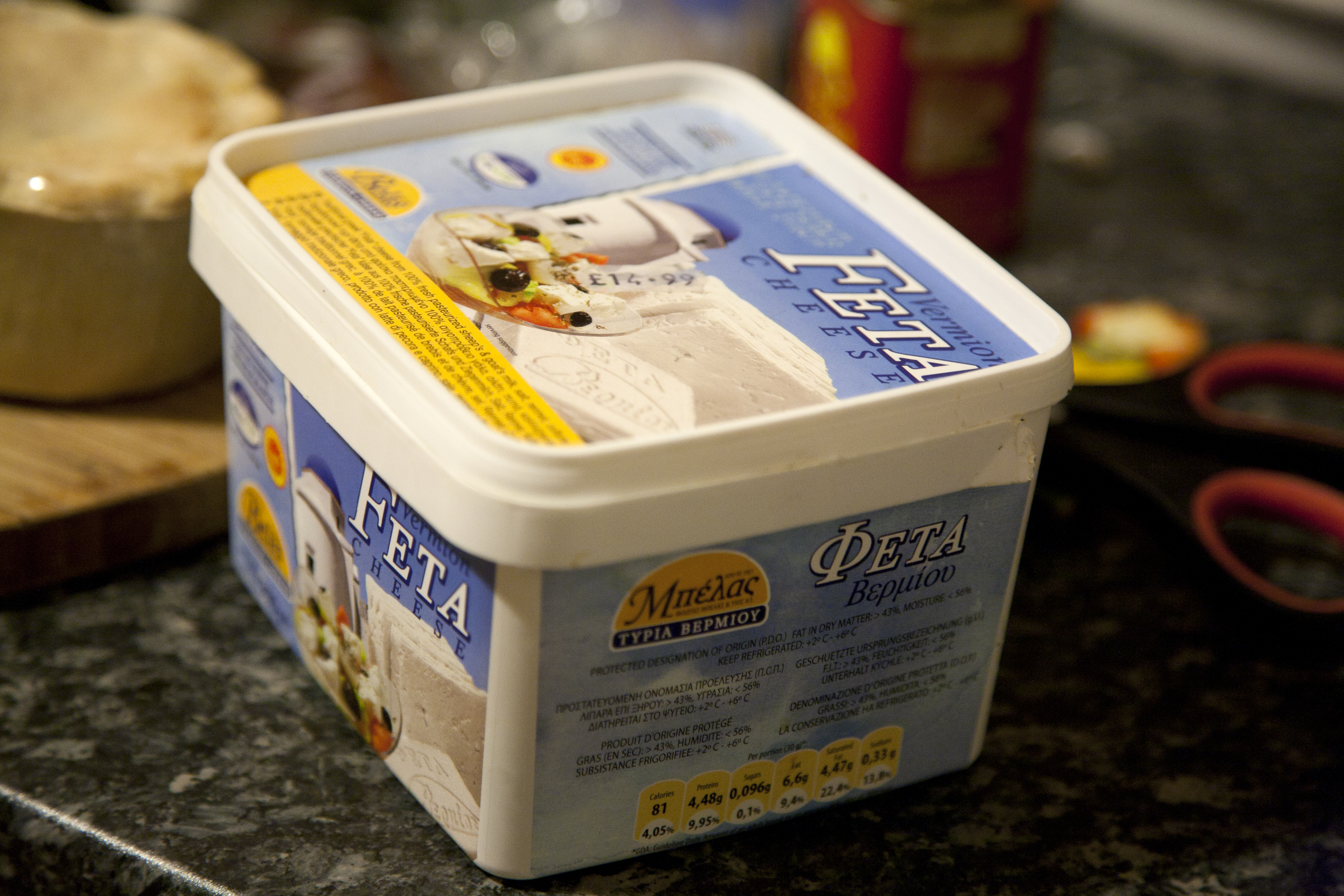
On my way back to work I stopped at Cardiff Central Market in haste. I love visiting this beautiful Victorian market building that is home to one of the few remaining fishmongers in Cardiff and where, at its 1st floor balcony, quality LP lovers are at luck. Unfortunately, last week, I only had time to stop for some salad leaves and cherry tomatoes.
Introducing the ladies…
Alice and Emma are my neighbours. I forget how long I have known Alice for and it seems irrelevant. We haven’t always socialised regularly. I have worked, danced, talked and shared food, and most importantly shared moments of my life with Alice, and that I always enjoy doing with this lady. And Emma, who I met through Alice, I have just known for a few months only but I really enjoy getting to know her.
For this first episode of Ladies Del Roath I prepared two different pies, one with leek and cheese and another with olives and rainbow chard. We savoured the pies with lettuce and tomato salad, a bottle of Primitivo red wine from Puglia, Italy and in the musical company of Eartha Kitt and Dinah Washington.
Recipes and preparation
Leek and Spinach filling
Leek and cheese pies had rarely been just that at our home when I was growing up as mom would usually add spinach or other wild greens. But for my version of a leek and cheese pie I used 1 onion and a gigantic organic leek (the equivalent of 4 medium leeks). I sautéed the finely sliced onion in some olive oil , a pinch of salt and a tea spoon of unrefined caster sugar until it almost caramelised. I added the thinly sliced leek and cooked for another 5 minutes or until it was softened. After cooling the mixture I crumbled 250-300gr of feta in and added plenty of freshly ground pepper. I added 2 beaten eggs, as usual, but this time I also added two tablespoons of crème fraiche for a creamier filling. You can also use yoghurt or skip this step.
Olive and chard filling
For the olive and chard pie, I sautéed a finely sliced leek, threw in 5-6 halved cherry tomatoes and about 100-150gr of roughly chopped pitted olives (preferably Kalamata variety but other similar types of brown olives will do), and added 500gr chopped rainbow chard (stalks removed) to cook for about 10 minutes. Sometimes I like using rainbow chard instead of spinach because of its tenderness, mellow flavour and beautiful colours. I find it regularly at Roath farmers’ market at the Blencaemel Farm stall.
To finish off this filling I crumbled 250-300gr of feta cheese, and added a handful of grated cheddar and plenty of freshly grated pepper. No eggs this time! s
Preparation and Baking
Whilst the fillings were cooking I prepared the pie dishes. In my kitchen I use 25cmx 30 or 35cm baking trays for pies. I separate my filo pastry pack leaves in half: for the bottom and the top half of the pie. For 2 pies I used 2 packs of Greek imported filo pastry. I use at least 12 filo pastry leaves for each pie. Most imported pastry packs have 12 or more leaves but the ones you get from supermarkets like Sainsbury might only have six.
Lightly oil the baking tray with a brush before laying the first pastry leaf and then continue by lightly oiling each filo and continuing to layer the first half of the pie (6 or more leaves). I prefer that the filing goes in the middle and then I lay the rest of the pastry leaves as before. You might find other recipes, which require more filling added every couple of leaves.
At the end of the layering process I always fold the edges of the pastry leaves in to secure the filling and create a pie crust. I get rid off excess filo to avoid a dry and flaky pie crust. To finish off the pies for our ladies Del Roath meal, I tried two different toppings. For the leek and cheese pie I melted a knob of butter in 4 tbspns of milk and poured that on the pie starting from the crust edges and topped with sesame seeds. For the olive and chard pie I glazed with some beaten egg and tipped any excess off. Before putting the pies in the oven I pre,cut them into 6 large portion. This allows better cooling down and easier serving after the pie is cooked.
The pies cooked in a preheated oven for about 30-45 minutes, at 170-180 Celsius or Gas Mark 4. If the pie browns too quickly cover with some aluminium foil. And please make sure that the bottom of the pie is cooked before removing.
These ingredients made 12 large portions of pie. There was plenty left over for one hungry man and lunch for two the next day.
Note: I take most recipe cooking times as indicative as ovens differ. My oven is unreliable so I have learnt to adjust cooking time and temperatures. I always set an alarm to go 10 minutes before the indicated cooking time to double check that everything is still going to plan.
Celebrating Hope
Recipes for roast pork and vanilla birthday cake.
I was probably between 2-4 months old when I first met Elpida and she was about a month younger. Ours is one of these important, long-lasting relationships that define and continuously explain to us a lot about each other. Her name is Hope and my name is Good News. So you could say that our parents equipped us with names that could help us withstand trials and could positively influence our fate and the fate of those who we love.
Ours is a relationship of many flavours and emotions. Elpida and I have played, cried and laughed together. We have grown up alongside each other and then apart, in different countries. We have risen above petty family feuds: our parents were siblings. We have lost touch and found each other again. And then we found ourselves living in the same UK city away from Greece, the same city where Elpida’s dad spend some of his time in the late seventies. And perhaps our bond was strengthened when by some divine intervention or just by chance we were present when each one of us suffered significant blows in our lives, first in 2001 and then again in 2007.
One of our chosen ways to savour life is through eating and cooking. After all we think that good appetite and culinary curiousity is a sign of appetite for life and having the capacity to enjoy it. Perhaps it is also because my dad would reward us with a bite of honey on toast when we got the times tables right! Or because my uncle would cook up a storm whilst we were playing in the background. Or maybe it is also because we spend many hours at the sofra (small low round table) with our grandmother making filo pastry and cheese pies and listening to stories when we were children.
One of my first memories is Elpida grabbing anchovies and sucking lemons when we were about 3 on holiday, much to the entertainment of all the adults. Another is running naked on the beach and into the sea with Elpida, Chryssie (El’s sister) and Dimitri (my brother) whilst the grown ups were roasting sausages and freshly caught fish, when we were 5 or 6. Many ‘eating’ years on here we are, in our thirties, cooking in my kitchen, at a place called Cardiff.
Last night Cardiff friends and loved ones gathered around the table to celebrate Hope, our own Elpida’s birthday, a hope that we can hold, hug and love. May this be the best year yet cous!
For Elpida’s birthday we enjoyed a roast pork shoulder with roast vegetable and a berry vanilla cake.
Hope’s pork roast and vegetable
A pork shoulder cut (1300 gr) from Slade Organic Farm stall at Roath Farmers’ market was Elpida’s choice of birthday dinner. This lady loves a traditional British roast: one of the most significant contributions to internationally recognised culinary delights. I searched for the best recipe but concluded that simplicity is best for a cut of such good quality. Peter Davies, owner of Slade Organic Farm, is a likeable man who never rushes you off the stall, looks for the best cut and type of meat for your occasion and number of guests, and always hands out cooking instructions and good recipes. It is a joy to spend time with Peter, and if you live in Cardiff and have never met him pay him a visit at any of the Farmers’ markets that Cardiff hosts.
The pork was scored and tied by Peter but in the rare occassion that you get a joint that is not scored, remember scoring is very important for a crusty pork crackling and when doing this it important to cut only half way through the skin.
To prepare the pork, I rubbed sea salt in the scores, turned the pork upside down and seasoned the meat with a generous amount of salt and pepper. There were no herbs or spices added but 3 cloves of garlic were hidden in the pork shoulder without cutting into the meat.
I roasted the pork in an oven pot (covered baking dish) in high heat (gas mark 9) for 30-40 minutes until it was nicely browned on the top and then slow roasted it for another 3.5 hours at gas mark 5 (low heat). For the slow roasting I added between 1-2 cups of water and 4 bay leaves so that the pork does not dry out but to also prepare stock for a sauce or gravy. During the last two hours of the roasting I added garlic and celery to the stock. If you don’t have an oven pot you can wrap the pork tightly in aluminum foil.
Pork takes longer to cook and the rule of thumb is that you need 30 min per 500gr plus a 30 min sizzle at the beginning of the roasting at high temperature. I prefer to slow cook pork for longer so that it does not require any carving but it can be easily be broken off with just a fork.
At the end of the roasting you can always cook the crackling separately in the oven until it is crunchy and yummy and serve with the pork. I am not expert in making crackling but this version seems tasty enough to me.
For our gravy or sauce I heated up all the tasty pork juices, added a bit more hot water and corn flower, and keeping the garlic and celery I then blitzed with my mini-pimer into a creamy white sauce.
We enjoyed the pork with traditionally roast potatoes and roast butternut squash from Pantypwyddyn Farm .
Put aside at least 4 hours for preparation, cooking and letting the pork cool down before eating. With the additon of a small lasagne tray (contributed by Dr Dodds) and salad this dish served 7 people. There are no left overs!
Hope’s birthday cake
I came across this fantastic and simple celebratory vanilla cake recipe on bbc website. It is simple easy and delicious. The only variation in my recipe is that I added Einkorn flour as I had run out plain flour. I also would strongly recommend more vanilla syrup for the cake (at least 100ml). The crème fraiche and fruit version of the cake is delicious and a light alternative to the butter cream icing version of the cake.
Orza[1] with Orzo!
Orzo returned to my kitchen when I picked up a pack of a Misco κριθαράκι at the Deli counter of Pipi’s café in Cardiff and has since been the basic ingredient for many improvised meals this year. It has been the impromptu but exciting pasta dressed in a chilly infused yet simple red tomato sauce for long catch ups and film nights with my wonderful Wendy (AKA Dr Dodds). It has lined our stomach with starchy satisfaction at the end of wine mellowed evenings with Elpida (cousin and friend extrordinaire). A variation of the recipe has seen this dish turn into a pasta bake topped with strong cheddar. It provided the basic ingredient for simple salads flavoured with cooked young spinach leaves, pine nuts, fresh parmesan and pepper that welcomed unexpected guests stopping by to pay us a visit. Recently in the Γιουβέτσι (giouvetsi) dish that I wrote about recently orzo has reclaimed its Greek traditional use in my cooking!
The return to cooking with orzo pasta definitely pointed out an iterative journey to dishes and recipes that I have grown up with and characterise my Greek identity. I realised that this cooking itinerary from experimentation to solid basics has been repeating itself and in a symbolic way it sums me up: the alchemy of flavours, ingredients and recipes from the micro cultures of Greece to new tastes and worldly “cuisines” that have rubbed off on me in the 14 years away from the birth land. Innovation and reinterpretation at once but with once common characteristic: each time this cooking iteration returns to deep routed sensory memories and recipes that will always be part of me.
I have always refused to be mindlessly patriotic, I actually despise manifestations of national delirium and at times have fearfully rejected national symbols but I soon realised that there is a difference between cultural awareness and nationalism. The one embraces and mixes whilst the other puts up solid walls and preaches parochialism, albeit it with the same cultural reference . And one of the ways that I have come to love and appreciate my culture (in its emerging hybridity) is through cooking.
Thinking about all this today has made me reassured and happy in realising that I have not forgotten who I am and that I am becoming who I want to be: my own filter of tastes, experiencses and cultures.
Follow this link for more on simple Orzo inspired recipes.
[1] Orza! In the context used here means ‘go ahead’ or ‘sail on’ and is used as a phrase of encouragement in Greek. The word is latin and translates to luff in English and actually means to sail closer in to the wind (particularly when a vessels sail is flapping).
Goat and Lamb giouvetsi (Γιουβέτσι)
In mid September and soon after I returned from Western Crete, where we tried a variety of goat meat recipes, I noticed the Pantypwyddyn Farm stall at the Saturday farmers’ market in Roath sells wild goat. It was a meaty wild goat leg on the bone that had me looking for a Roast Goat spaghetti recipe otherwise known as γιουβέτσι (giouvetsi) in Greek. Even though the goat meat version of giouvetsi is one of my favourite dishes I had never cooked it before this September but have since added it to our monthly ‘meat’ treats much to the delight of Mr Green.
Γιουβέτσι (giouvetsi) is a term used in Greek cuisine for roast meat-and-pasta dishes that are cooked slowly in an oven pot. Γιουβέτσι seems to literally translate ‘roast’ in English but I have not been very successful with this word’s accurate translation, origin or etymology and must keep searching for its roots, history and journey into the Greek cuisine and language. One thing’s for sure the word has been adopted well in Greek cuisine and is just synonymous with the dish!
Γιουβέτσι (giouvetsi) is traditionally cooked in an oven pot called γάστρα(gastra) a term that literally translates to ‘belly’ or a ‘ship’s hull’. In cooking terms it is (traditionally) a clay oven pot for slow cooking but there are many modern versions made of metal and do the job well. Στη γάστρα (in the gastra) in every dayuse is a phrase that describes dishes and their method of slow oven cooking, particularly for meat, even if electrical or gas ovens are used instead of a traditional wood-fire oven or a fire over which the clay or ‘other material’ pot was placed; you will come across it in many restaurants and taverns in Greece.
The pasta used most commonly in giouvetsi, particularly for the veal or beef version of the dish, is orzo (κριθαράκι) but spaghetti is more commonly used for the lamb and goat on-the-bone versions of the recipe. Many cook books and blogs suggest adding tomato, onion, bay leaves, garlic and cinnamon sticks together with 2-3 cups of hot water to the goat or lamb whilst it roasts to help prepare the stock for the pasta to cook at end of the cooking time. There are many versions that I read and talked about recently but here is what I have tried in the past two months.
The recipes
For my goat giouvesti recipe I used juice of a lemon, thyme, olive oil, salt and pepper to marinade the goat (about 700 gr of meat on the bone) and added a bit of boiling water (nearly a cup), some bay leaves and a bit of sweet paprika to the pot to prepare the stock for the pasta whilst the meat roasted. I slow cooked the goat on the bone for around 2 hours, a bit longer than the suggested time (30 min per 0.5 Kg+20min). By that time the meat was ‘falling’ off the bone so in this case I removed the meat from the pot for the second part of the recipe. The second part took 20 minutes, and required some more water added (1-2 boiling hot cups) and half or one packet of spaghetti. I deliberately stirred the pasta a couple of times whilst it was cooking in the oven and instead pouring both two cups of water at once I added them gradually to make sure the pasta absorbs all the liquid. I didn’t really need to adjust the seasoning but still added some more pepper as I really like the peppery taste of the pasta with the goat.
For today’s lamb giouvetsi I used a leg of lamb (1kg) bought at the Sunday Riverside Farmer’s Market, again from the Pantypwyddyn Farm stall to make a variation of the goat recipe, an uplifting treat to our flu and cough tortured souls and bodies (we have had enough soup already!). I ‘hid’ whole garlic cloves in the leg of lamb (about 5) and marinated it in lemon juice and olive oil, rosemary, thyme, salt and pepper. For the stock I started as before but after 1 hour and 15 minutes of roasting I added some passata tomato (half to one cup), another cup of boiling water and two small cinnamon sticks. And about 15 minutes later I added about 250gr of orzo pasta that slow cooked for 20 minutes. It was good I checked half way through the pasta cooking as all the water was all gone and I had to add a bit more (about on cup). This time I did not remove the meat from the oven dish for the second part of the recipe. And just like that (admittedly after 2.5 hours) we tucked in the most delicious lamb recipe I have cooked. Tried and tested – this dish is guaranteed to be a success.
Note to all Cardiff Farmer market regulars: Whilst there is no guarantee you will get goat at Saturday Roath Market, and you can replace it with lamb, the stall holders told me goat is growing in popularity. So do keep an eye out for it, ask the stall holder if he has any in the farm fridge because they can bring some along to Sunday’s Riverside Market and …make sure you give me a shout too! I do prefer the goat meat because of its leanness, prefer its texture and find it more flavoursome than lamb.
- ← Previous
- 1
- …
- 3
- 4
 Lia's Kitchen
Roll on 2012
Posted on Updated on
Choosing photos taken by Tom Beardshaw and Dan Green on New Year s Eve party to share with you has proven a lot more difficult than I thought! I spent most of my Sunday afternoon selecting images, deleting them by mistake (oops!), trying to recover them, and remember what I need to do to reduce photos in size…arghh!!!
This slideshow requires JavaScript.
Perseverence has paid off but I am exhausted. So the two cabbage roll recipes that I also wanted to share are not typed up yet and will be with you early in the week. Photography is no simple task for my mind. Mr Green I am in awe of you- I don’t know how you do it! I takes me ages to even put a slide show together online.
This slide show captures a few moments of our wonderful evening on New Year s Eve. I love Tom s photos and have deliberately chosen some blurry images because … well this is how I remember some of the night! Love to all particularly my lovely guests and stars of our night x
PS-Thanks to Tom Bearshaw who picked up the camera and document much of the night. And thank to my lovely Dan Green for teaching my some editing basics and providing some food snaps.
PPS-apostrophes and other symbols are not working on this laptop at the moment…this might explain the chosen syntax of this blog entry.
Share this:
This entry was posted in Comment, Events, Greek cuisine and tagged cabbage rolls, dangreen, newyearseve, party, tombearshaw.