
Greek cuisine
A-not-so-Greecee-food-affair
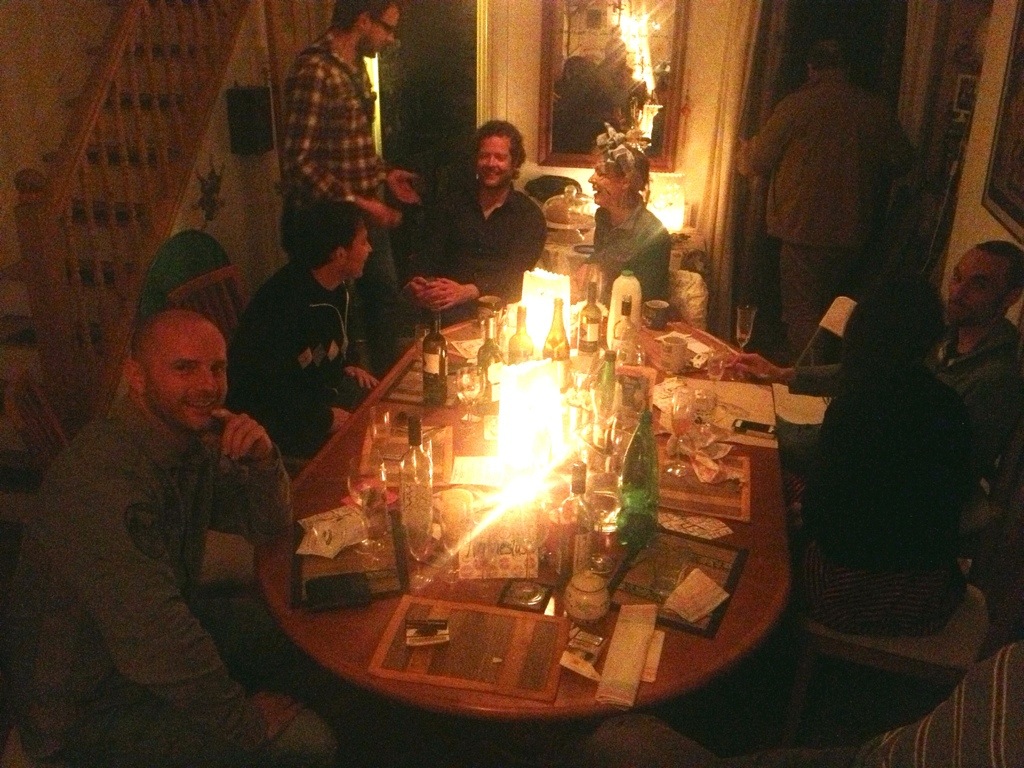
Last night the Greek gods of Olympus gathered around our table to savour good food and good company.
A-not-so-Greecee-food affair presented dishes that many people in Britain have a different cultural reference for like revithokeftedes (the Greek falafel), politiki salad (the Greek coleslaw ) and Aubergoni (Cycladic cannelloni-like aubergine parcels).
On arrival people were greeted with a glass of Nectar-a strawberry cucumber and lemon juice cocktail sweetened with honey. And we closed the supper with an almond meal and semolina cake doused in brandy syrup and served with ice cream.
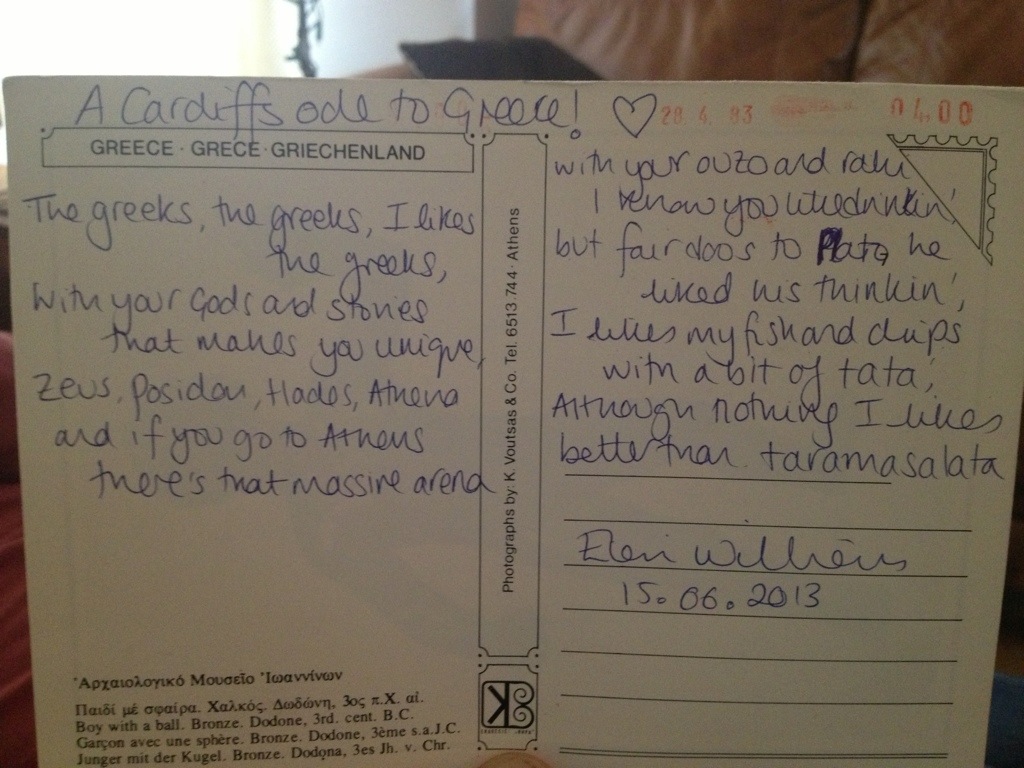
Everyone was an Olympian god last night-persona randomly allocated on arrival. And there was poetry (Cardiff’s ode to Greece), singing which included the very apt political song ‘Εν δυο κάτω’, learning your name in Greek and some interesting Greek facts relating to Nana Mouschouri’s vocal cords and private parts. I am still laughing!
Thank you all for such a wonderful night and honouring Lia’s Kitchen with your presence. I can’t wait for the next supper club. If they are all like this one we are in for a year of a wonderful evenings.
I hope the gods smile on you today .




Tourlou!
Spring is here! I am writing to you from one of our local cafés. Its wide French doors are open to an outdoor terrace. It’s still light and warm and a soft breeze just brought in scents of blossom (and something delicious cooking in a kitchen).
I have chosen to share with you the recipe for Tourlou, a mixed vegetable dish that tastes like spring and summer to me. A fridge chilled portion of it with some crumbled feta (surprise, surprise!) is just as nice to eat as straight after cooking or cooled to room temperature. But I’d prefer the chilled version today because it makes me think of Vourvourou, my friend Maria and resting in the shade in her company sipping a chilled beer (sigh!).
Back to cooking! Tourlou is an easy recipe and great for using a medley of vegetable. It can be a light evening dinner on its own or served with rice, a delicious side dish or alternative to salad, and a fantastic tapa or meze. And apparently Tourlou is the same as briam only it’s cooked on a hob- here’s something new for food geeks like me.
Ingredients
Serves 2 for main and more as a meze or side
1 aubergine
2 courgette
2-3 potatoes
1 large onion, chopped
2 garlic cloves, finely chopped or crushed
1 pepper, chopped (optional)
1 carrot (optional)
200g ripe tomatoes, finely chopped or chopped in blender
OR
1 can chopped tomatoes (400g mixed weight)
Small bunch of parsley, finely chopped
1 tsp salt
½ tsp sugar
Pepper (to taste)
Olive oil
Preparation
Takes up to an hour
Wash all vegetable, peel the potatoes, and dice it all in five centimeter (large) chunks.
Sauté the onion and a pinch of salt in about two Tbsp olive oil for a couple of minutes.
Add one or two more Tbsp olive oil, the vegetable, toss and fry for about five minutes.
Add the garlic, let it fry for a minute without burning and add the tomatoes.
Add the sugar and also season with salt and pepper.
Stir well and cover.
Lower the heat and simmer for forty minutes or until the potatoes are soft.
Add the chopped parsley at the end or half way through the cooking.
Lia’s Notes:
- For a good Tourlou do not to stir during simmering to avoid breaking the vegetable as it softens.
- The tomatoes should have enough juice for all the vegetable to cook but halfway through cooking check if you need to add a couple of Tbsp of water to make sure the potatoes cook.
- Replace potatoes with other root vegetable such as parsnip if you like.
- I prefer cooking Tourlou with more aubergine and one courgette.
- Use any vegetable you like. Okra is fantastic in tourlou but might take a bit longer to cook.
- For Briam use the same ingredients, add a little bit of water and cover a baking tray with foil. Slow cook for about an hour in the oven.

I’ve cooked, I’ve sold, I’ve conquered
I usually underestimate how much work and particularly how much fun there is in doing something that I have never done before. This is exactly what happened when Lia’s Kitchen was on-tour last weekend and in preparation for the Art Carbootique on 14 April 2013 in Chapter, Cardiff. Admittedly, I tried to do so much. I arrived at the market with so many pies, too much halva, and boxes of Mexican biscuits … but somehow it all worked peeps! Everyone seemed to love it, with cards and food samples ‘going going gone’ throughout the day and the past week.
Deciding to do this was one of these ‘why not?’ moments that I absolutely love-it feels like the beginning of a journey or an adventure. Preparing was perversely exciting for the organizing geek that I am. I got tired, oh yes I did. But the satisfaction that being part of the market gave me is indescribable.
A highlight was getting the chance to cook at Thé Pot café in Cardiff and I would like to thank the wonderful Natalie who kindly let me use kitchen to prepare all the food samples. I love Natalie’s café and I think she is an astute business lady who I would be happy to work with any day of the week.
And apart from Twang! And Dan Green who helped make the recipe cards I could not have done this with without Michal Iwanowski, who apart from an endlessly creative being is a wizard in the kitchen, and my loved cousin Elpida Sarvani, who might be one of the smartest and multi-skilled persons I know. Thanks you all.
And thanks to all of you for supporting Lia’s Kitchen! Watch out, this is just the beginning…
If you are interested in getting Lia’s Kitchen Card Recipes have a look here and please get in touch at liaskitchen@gmail.com. It’s a bargain!
-
- The Pot Cafe Kitchen
-

- Lia’s Kitchen at Art Cabootique
-
- Lia’s Kitchen at Art Cabootique
Leek is gold
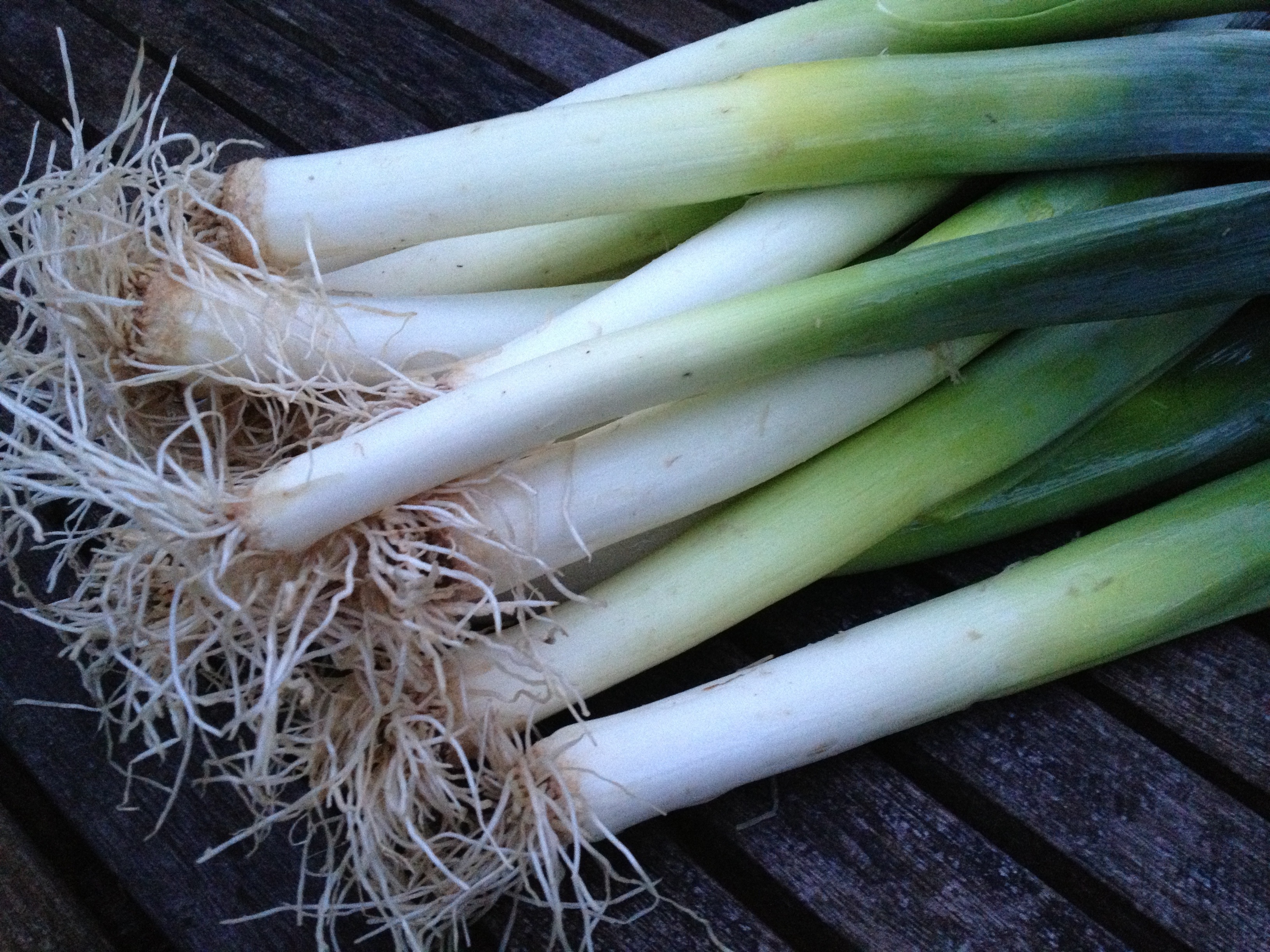
It has been a cold spring in Wales but on my return from the vegetable stock exchange this morning I can say, hand-to-heart, I was hoping for a cheaper price for leek when I set out on my quest at dawn. But leek is gold and spinach is platinum it seems.
Still, final ingredient ticked off my list, I am enjoying a warm spiced apple tea surrounded by onions, leeks, and boxes of goodies with which I concoct Lia’s Kitchen food samples for sale at the Art Carbootique, Chapter Art, tomorrow (14 April 2013).
It takes preparation getting ready for a market stall and serving food, even if just samples. Food hygiene training, finding a kitchen, paperwork, beautification, set up and much more add up when you have weekends only to fit it in. It’s all fun and worth it though!
I can’t wait until tonight and Sunday morning for the part I enjoy most: The cooking!
My recipe (post) cards are in front of me. They look beautiful and include recipes for the three dishes I’ll be making.
And guess what there’s leek in one of the recipes, lots of it!
Good morning!
Recipe postcards from Lia’s Kitchen
It’s happening !
I have written my own little recipe cards and will be presenting and selling those at the Art Car Bootique at Chapter Arts Cardiff on 14 April 2013.
The cards are designed by the fantastic Mr Twang of http://twangdom.com/ , to whom I owe many thanks. You are extremely talented and intuitive with a great feel for what your client wants.
Some of the photos are by another talented artist Dan Green at dangreenphotography.com but also by moi! It’s all done in my kitchen so the food is real and all eaten soon after it’s immortalized.
If in Cardiff, Wales on 14 April drop by Chapter Arts . Meet us (me, Twang and Dan Green) and meet the recipe cards!
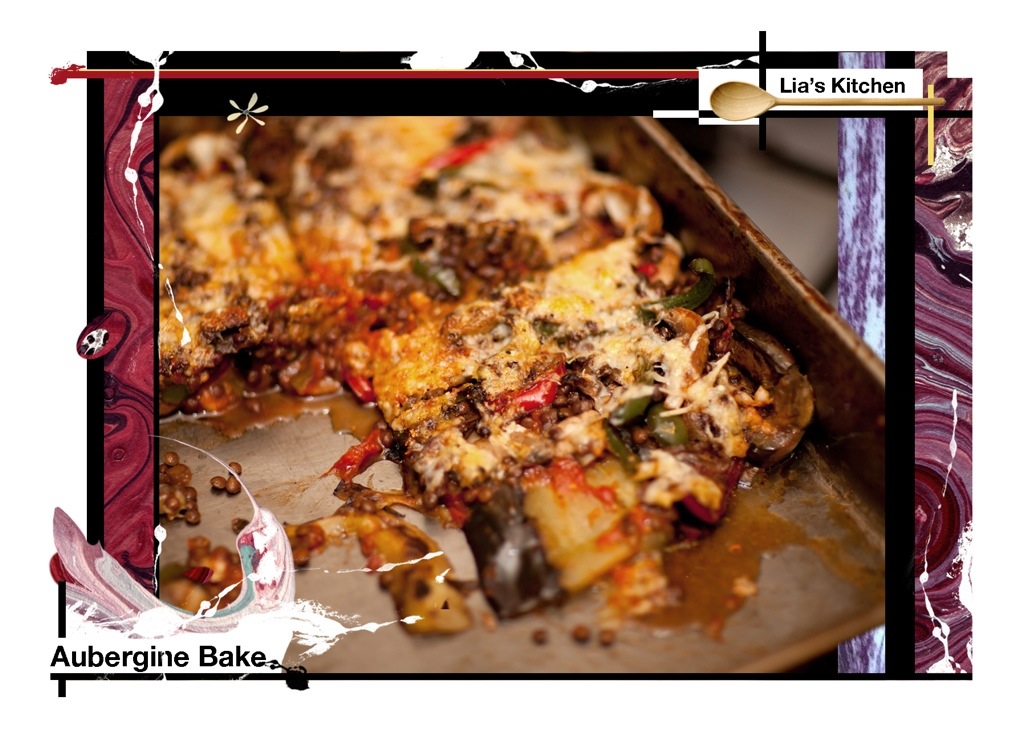
Caramelised Onion, Leek and Spinach Pie
A favourite pie with a sweat and creamy twist. Makes 12 pieces.
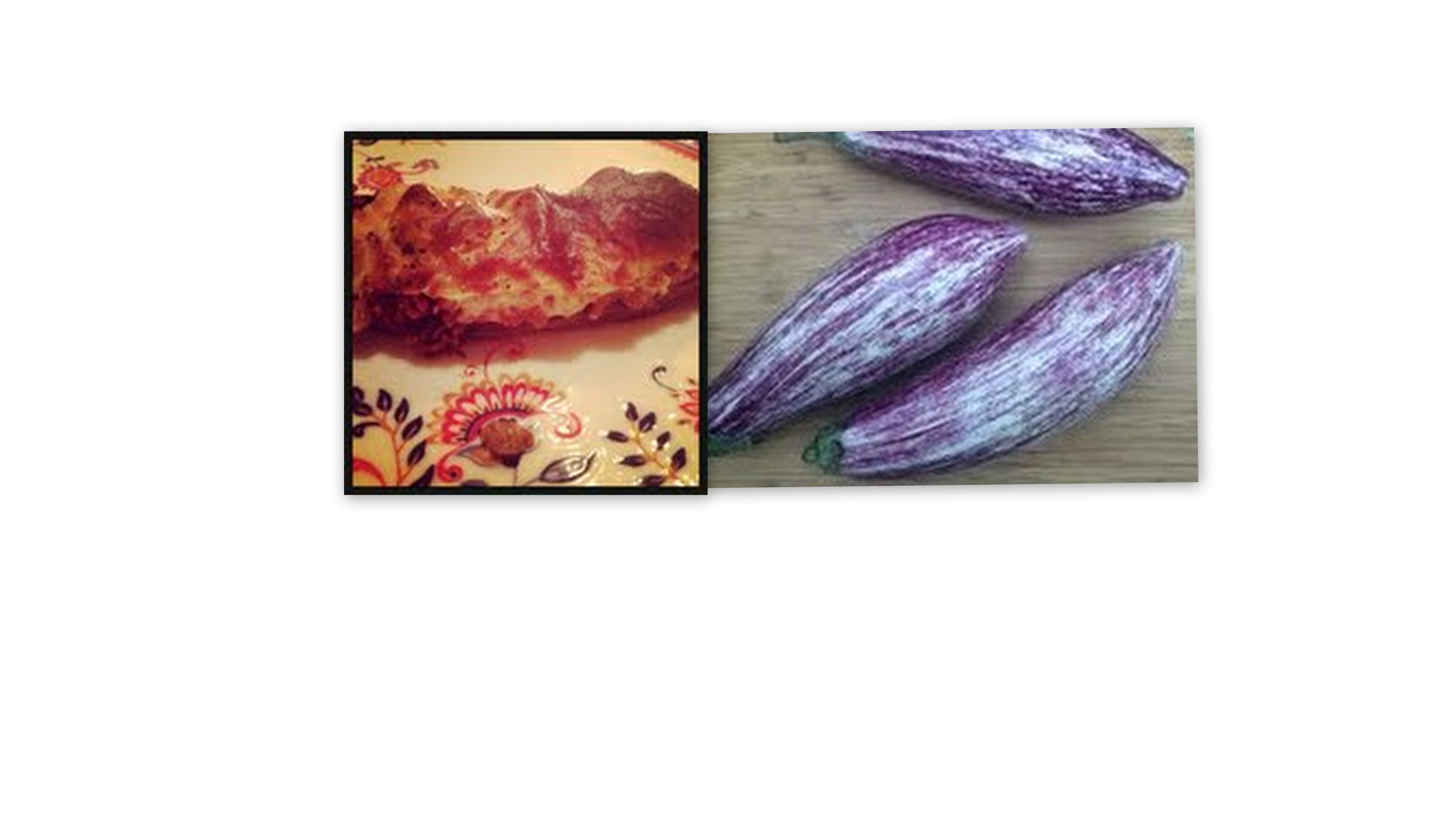
Little Shoes of Aubergine
This is one of these dishes that I loved as a kid as much as I love it now. A true family favourite at many Greek homes around the world. Little Shoes (Papoutsakia) are a Sunday special, a holiday treat and a more indulgent version of the know Imam Bayildi.
Below is a recipe that might convince you that Little Shoes are as easy to make as lasagne, or a pasta bake, if not easier. Little shoes can easily be transformed to a vegetarian version as suggested below. If you are vegan you can remove the béchamel and still have a very tasty special dish. If you use plain wheat free flour for the béchamel you can have a dish for your wheat intolerant friends. This dish can be easily adapted to your taste and needs.
Ingredients
The little shoes
1kg medium sized Aubergines (preferably Tsakoniki akaΤσακώνικη)[1]
The Filling
500gr Quorn mince (or 700gr minced beef for a non-vegetarian version) [2]
3 small onions, finely chopped
2-3 garlic cloves, finely chopped or crushed
1 cup of dry white wine
2-3 tomatoes or 1 tin of chopped tomatoes
1 bunch of parsley , finely chopped
The Béchamel
4 cups of milk
1 cup flour
50gr butter
1-2 eggs
Tspn ground nutmeg
1 cup of cheese (graviera or pecorino are preferable)
salt and pepper
Preparation
The Filling
Sauté the onion in a little olive oil with a pinch of salt until nearly translucent.
Add the Quorn or meat mince, season with salt and pepper and stir fry. [3]
For the Quorn mince add a little more oil so that it does not stick to the pan.
For the beef mince keep stirring so that the mince remains separated and evenly browned.
Add the wine and stir for a couple of minutes.
Add the chopped tomatoes, the garlic and the parsley, stir, cover and cook.
The filling is ready when the mince has absorbed all the liquid but is not dry.
This should take approximately half an hour for quorn and a bit longer for the meat version.
The Aubergines
Wash the aubergines, cut the stalk end off and slice in half lengthwise.
Bring a deep pot of water to the boil, add the aubergines and boil until they are slightly soft (5-10min).
Drain and cool down.
Lay in a baking tray skin down and with a sharp knife cut a cross shape in the fruit’s flesh
Pull open to create enough space for filling.
The Béchamel
Prepare the sauce whilst the sauce is still cooking and use a cooking whip for stirring [4]
Add the milk to the pan and stir in the flour making sure it is well mixed with no lumps [5].
Place on medium heat and bring to the boil stirring more as the temperature rises.
When the sauce starts simmering lower the heat, add the butter and stir continuously.
Add nutmeg, salt and better and a whipped egg.
Continue stirring on low heat until the sauce thickens.
When removed from heat keep stirring, add the grated cheese and mix well.
The baked dish
Add the filling to the aubergines evenly.
Spread the béchamel on top of the filling.
Bake in a preheated medium temperature oven until the béchamel is golden (about half an hour).
Rest and cool down for 15 minutes before serving.
Notes:
[1] 1kg of aubergines should be 5 medium pieces of the tsakoniki, flask variety. You can cook this disk with the normal aubergine but the tsakoniki variety is much nicer with this dish and cooks faster.
[1] 1kg of aubergines should be 5 medium pieces of the tsakoniki, flask variety. You can cook this disk with the normal aubergine but the tsakoniki variety is much nicer with this dish and cooks faster.
[2] 500grof quorn make more filling than 500gr of minced beef so you might be able to fill an extra pepper.
[3] You can add the Quorn mince frozen to the pan. This should take a few more minutes than when your mince is defrosted. Overall cooking with quorn should be faster than with meat at this but also the sauce cooking stages.
[4] I prefer a flexible wire whip when making béchamel and it helps avoid lumps.
[5] I used plain wheat free flour this time which was very easy to mix in the milk and made a very creamy sauce.
A year of health and St Basil’s lucky coin of justice
I just stored my lucky New Year coin protectively like a precious blessing. This year the coin will bring us health -this is what the New Year’s cake promised when we ceremoniously cut it on the 1st January 2013.
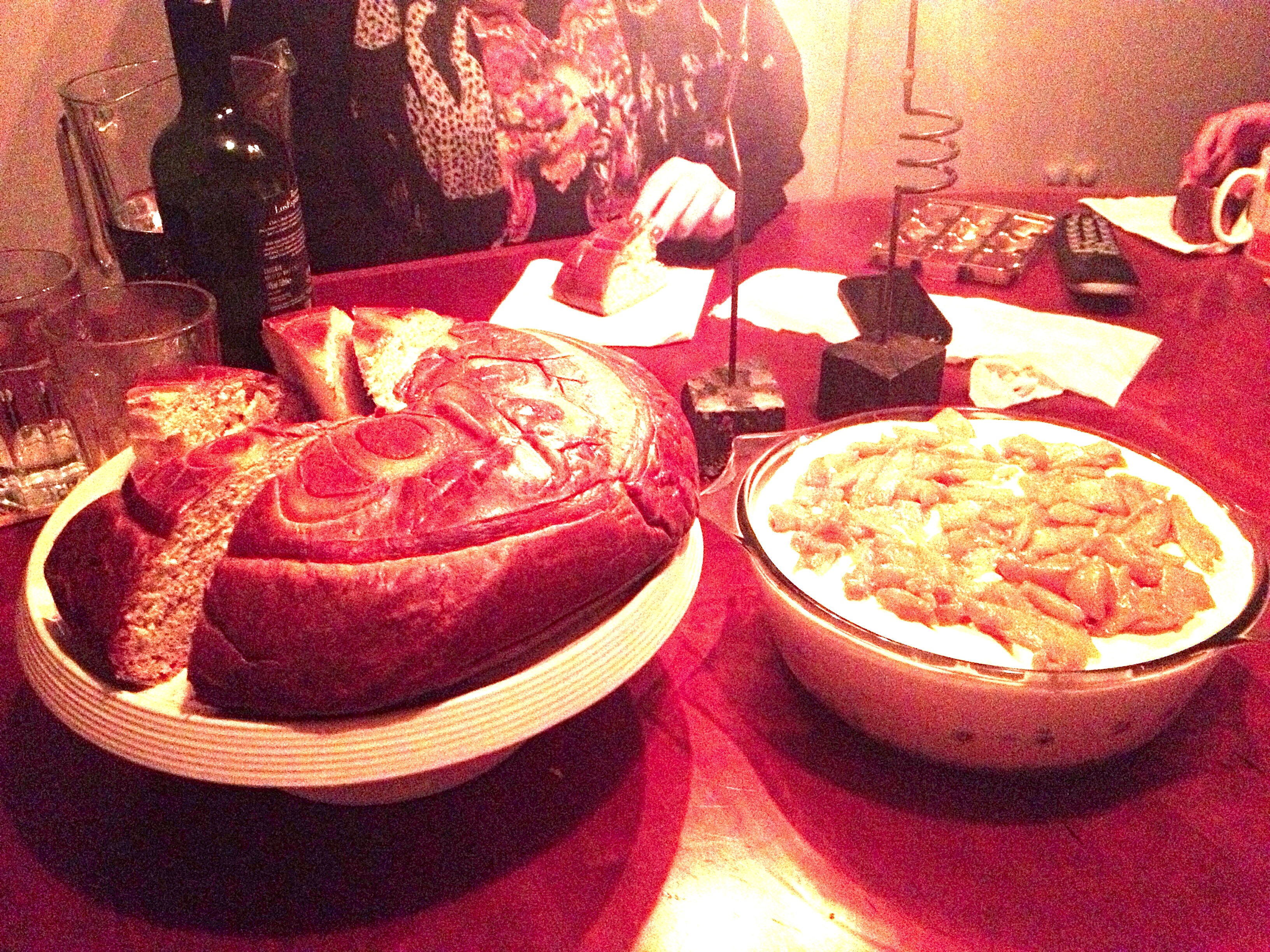
Every New Year’s Day-when we slice St Basil’s cake and eat through its aromatic brioche texture, flavoured with mastic and mahlepi, in search of the lucky coin- my British and other non-Greek guests ask where this tradition comes from and what it really means.
The person who receives the coin is destined to have a year of great luck. And every so often the coin falls to a special piece cut for the house or, like this year, for health.
So why do we do this?
The cake is named after St Basil who may have been the real Santa Claus (not the Coca Cola one) and who was an archbishop in Cappadocia. When Basil took over his post he realized that great injustice had been done to his town people through high unjustified taxation -that rings a bell does it not? To return town folk their fortune and to overcome the obstacle of how to identify the owners of the different items Basil decided to bake a massive cake and to place their precious stones, cold and coins in the cake. He then invited the whole town to a big celebration where that cake was cut ceremoniously. The myth says that miraculously each person received their own possessions in the piece given to them. After Basil died the cake ceremony became a tradition.
Tonight, well into 2013, I am contemplating my luck of which I have much. I found this a picture of this year’s New Year dinner and my lucky coin and thought I’d share my good fortune with you.
Be lucky, healthy and happy.
This entry is dedicated to Tom (28), Vaggelio(37), Lucy(32) who left us in the past seven years; to Pavlos and my wonderful aunts Claire and Ellie who beat and are beating cancer; and to our mental health which we all still have because of our own courage and the love of our friends and family.
The return of the humble: the sardine
Sardine is a humble nutritious fish that has offered me many meals at home and in taverns throughout my life.
We used to buy sardines in cone shaped newspapers. Mr Giorgos, the fishmonger in Thessaloniki’s Kifisia, the neighbourhood I grew up, used to fill them generously with big handfuls.
Saturday has always been a fish day at my parents house in Greece and also the day that mom looks forward to her little glass of ouzo or raki with some sardines or gavros (small fresh anchovies) as a starter. In the depth of winter we would grill sardines or bake them in tomato sauce in the oven. On sunny mild days and in the summer we would marinate them in with herbs, lemon and sometimes freshly grated tomatoes to grill outside attracting neighbours for an ouzo meze sit-down and most of the cats in the neighbourhood.
Below is a simple sardine recipe with a Ghanaian twist, a variation of an oven recipe I have enjoyed many times.
Ingredients
- 10 meaty and large sardines
- 3-4 freshly grated tomatoes or 2 grated tomatoes and half a tin of chopped tomatoes
- A large handful of kalamata olives pited and roughly chopped
- 1 full teaspoon of Ghanaian Shito sauce (optional)
- 2 tablespoons of olive oil
- Juice of 1 lemon
- Salt and pepper
- Oregano (2-3 pinches)
Preparation:
- Mix the tomatoes, Shito sauce, olives, lemon juice, olive oil, salt and pepper and oregano in a kitchen chopper for a few seconds, until just coarse but well mixed.
- Taste and season accordingly and if needed.
- Place the sardines in a baking tray, mix well in the marinade.
- Bake in a hot and then medium oven for 20 minutes or until cooked.
- Or if the barbequing season has started somewhere in the world where you might be, grill and enjoy out side. I guarantee that the sardines will taste even better.
Shito sauce is a Ghanaian sauce that consists primarily of fish oil and/or vegetable oil, ginger, dried fish and/or crustaceans, tomatoes, garlic and spices. It should be used in small quantities if you don’t like your dishes too spicy and hot. And it can be quite oily.
Fresh fish has clear eyes (non cloudy), red gills and a natural arch or curve. Buy wisely.
- ← Previous
- 1
- 2
- 3
- 4
- Next →
 Lia's Kitchen

Pilgrimage to the sun #2-Spoon sweets and tips from the Aegean’s Balcony
Posted on Updated on
Our time in Pelion was full of flavours, changes in scenery and surprises around each corner of its winding roads- a village, a forest, the sea, a character, some artwork. We saw Pelion’s Aegean waters tamed by heat and then turning familiarly choppy before we fled to Pagasitikos Gulf.
There is so much to tell you about Pelion. We spent nights on the beach bathed in the full moon after dining in the moonlight on the southern hill of Chorefto at Marabou – their homemade olive paste and salads are tasty and generous in portion. At the tavern Kima (Κύμα), Chorefto, we savoured the daily home cooked specials such as kanati and stuffed courgette flowers. We tasted an amazing wild green pie at Victoria’s café in Damouchari’s idyllic cove. We stayed as Foteini’s home in Damouchari who gave us herbs, courgettes from her garden to make a fresh tourlou. There we dined in candlelight, facing the lights of Ai Giannis and listening soft waves crashing on the sharp rocks, protected from the elements and civilization a little cove of serenity- I feared if we stayed there longer the mermaids would steal our minds. We discovered a stylish and creative coffee shop and art space when we found Karpofora in MIlies on our way to Afissos.
Almost three weeks ago on our way to Elitsa cove from Parisaina beach in Horefto we walked alongside olive groves hanging off the side of the mountain in North Pelion, Greece. We picked sage, bay leaves and gigantic super-lemons nourished by the sun-all two meters of Dan pulling down a branch so that I can pick the fragrant fruit. We ate wild figs from trees that fruited early. We breathed in herbs and sea salt.
We reached Analipsi beach on foot from Chorefto, passing the church and the beautiful Plimari Tavern (Πλυμάρι). We swam to Tourkolimano (accessible through water and the coastal path from Parisaina and Analipsi) and snorkeled along the rocks in the company of sea creatures. Then we fell asleep in the naturally shaded side of the beach and woke ourselves up with a swim and a coffee at the tavern. And finally at dusk we walked back to our base at Orlys and used our foraging ingredients for another home cooked dinner in the outdoor kitchen.
At Pouri village we woke up everyone when the dogs detected our mid afternoon entry. We climbed to the Nikolaou square, one of the tallest spots of the upper village, and the view took our breath away- the coastline all the way to Horefto where we started out from lay beneath us. Just as we were about to leave what seemed to be a closed coffee shop/tavern the jammed door open ajar and out came its smiley owner, Babis Lagdos.
At Babi’s ‘Balcony of Pelion’ in Pouri we had locally made Greek spoon sweets, cherry and walnut flavours. Greek spoon sweets are preserves made with local fruits (mostly whole), after their the seeds or stones are removed (e.g. cherries, apples but also baby aubergine). Otherwise citrus fruit with their peel and unripened nuts and seeds such as walnuts and figs are also used to make spoon sweets. Spoon sweet are called so because they are served and eaten with a teaspoon. If you go to Pelion or other Greek countryside places and you do not try the locally produced spoon sweets you should be punished! Not only would you be testing a local delight but you would also be supporting women cooperatives and local producers in the area. A spoon sweet is delightful with dark bitter coffee, on yoghurt or on fresh buttered bread.
We met and saw people who survive the changes of seasons, governments and life- reaffirming the inevitability of joy if your heart is open to it. Poets, cooks, wild campers, yogis, entrepreneurs, chilled locals, young hippies. So I cannot close this blog entry without mentioning Popotech (Ποποτεχ) and Gemma and Gerry.
About five minutes after leaving Pouri we drove past a big red sign and a man with a cap looking like a modern Sheppard in front of a red vehicle in what seemed a movie still or a scene that dropped out of the page of a book. In the backdrop I saw sunflowers, artefacts and colorful metallic structures dancing in the soft wind. We turned the car around and stopped on the road side. And so we met Gemma and Gerry and Popotech their art space, workshop and gallery. They live and work there summer and winter. In the past year they moved from Pouri and built their home on their own land on a hillside. They grow some of their food on the land and their inventiveness in structuring their workshops and house on a hillside is inspiring. The place is serene and beautifully wonderful, like an art playground for grown up children. Their company is a delight. And now that I think of it they must have lived in Greece longer than I have as I have been gone for sixteen years. I have no more words to describe Popotech and its two curators. This is their life, not just a transient show, and I would love to spend more time with them soon again. Take the road to Pouri from Zagora and keep your eyes wide open so that you don’t miss Popotech’s red signs on your left hand side. You won’t regret it.
Lia’s random facts and tips
Photo Galleries
Spoon sweets and Pouri
Popotech
Analipsi
Damouchari and Milies
Share this:
This entry was posted in Comment, Greek cuisine, Travel and tagged balcony of the agean, chorefto, coastal paths pelion, foteini ntamouchari, greece, greek spoon sweets, karpofora, karpofora bar, kima tavern chorefto, milies, ntamouchari, ntaouchairi, orlys, parisaina, pelion, pouri, sponn sweets, walking in pelion.