
Beetroot Dip
Beetroot …. its colour is vivid, its name is like an eclectic type of music to dance to, its taste earthy but versatile and adaptable. Deeply influenced by Tom Robbins’ novel ‘Jitterbug perfume’ I have developed this strong belief that beets help build physical, emotional and mental resilience, they feed warriors and lovers, they make you stronger, protect and empower you. I am besotted with this root veg!
This September the beetroot at the two farmers’ markets in Cardiff is gigantic, earthy but deliciously sweet. So make sure you grab some from the local stalls either at Roath or Riverside-don’t miss out on its autumnal delight.
Last weekend golden beetroot was the star guest ingredient of a sweet balsamic vinaigrette salad at our art and dining supper club. A few weeks ago, in the first few weeks of September, a beetroot and carrot soup with caraway seeds warmed us up when the weather suddenly turned cold. And only yesterday I concocted a Moorish , colourful beetroot dip, which I urge you to try making without reservation. Enjoy the recipe below.
Ingredients
Enough for at least 8 starter portions
- 500g mixed or red beetroots washed well but not peeled
- 500gr Greek strained yoghurt
- 200gr feta cheese
- 30gr chives
- 2 cloves of garlic, crashed
- 2 t paprika
- 1/2 t cayenne pepper
- 1 T white wine vinegar
- enough olive oil to make dip smooth (about 1/2 cup)
- salt and pepper
Preparation
1hour
- Roast the beetroot in a hot oven until soft for around forty minutes.
- Whilst the beetroot are roasting prepare a paprika and chive yoghurt dip.
- Cream the feta cheese with one-third of the olive oil and the vinegar in a food processor (pulse) or in a deep bowl with a spoon.
- Add the chopped chives , the crashed garlic , the paprika and cayenne pepper . If added to a food processor pulse again.
- Smoothen the cheese base by adding all the Greek yoghurt. Add another third of the olive oil and stir well.
- Remove from the food processor.
- Try a bit of the yoghurt base and adjust seasoning according to taste.
- After the beetroot is roasted and soft enough allow it to cool enough to peel the skin.
- Cream the beetroot in a food processor or chop and mash in a bowl with a fork.
- Add the yoghurt dip and as much oil as needs to make it blend well (you might not need any more).
- Taste and adjust the seasoning of required.
- Serve with carrots, celery or breads.

Good food for a good cause
I am joining forces with Dan Green to create a fundraising art and dining experience. As well as supporting my food ventures, we are collaborating to help raise funds for a community art project in Ghana, a project affiliated to our favourite charity , the Safe Foundation, as we have come to know this Ghanaian community through their work and support.
Large scale prints of photos of the Kumasi community and its members will be pasted in the neighbourhood streets and walls of the school Safe Foundation volunteers started building in 2010. We want to empower and pay tribute to a community that builds its own resilience and gives back to the visiting Safe Foundation volunteers as much as they give to it. The artists will collaborate with the Safe foundation to make this project happen but we will need support to fund its completion, and costs such as materials and airfares.
We will soon be sending more information to many of you about our endeavours but we count on your support to make this project happen. So watch this space, get in touch, get involved!
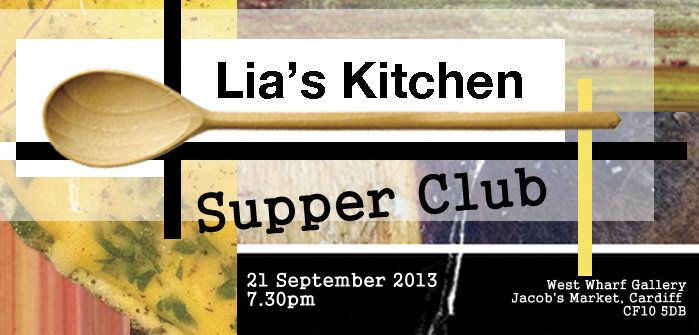
Our first supper club is taking place on Saturday 21 September 2013 at Jacob’s Market Cardiff. You can book a place at the event here:
http://www.wegottickets.com/sct/ZgGSsYkKGA
And you can find out more about the artists here:
Email me at liaskitchen@gmail.com.
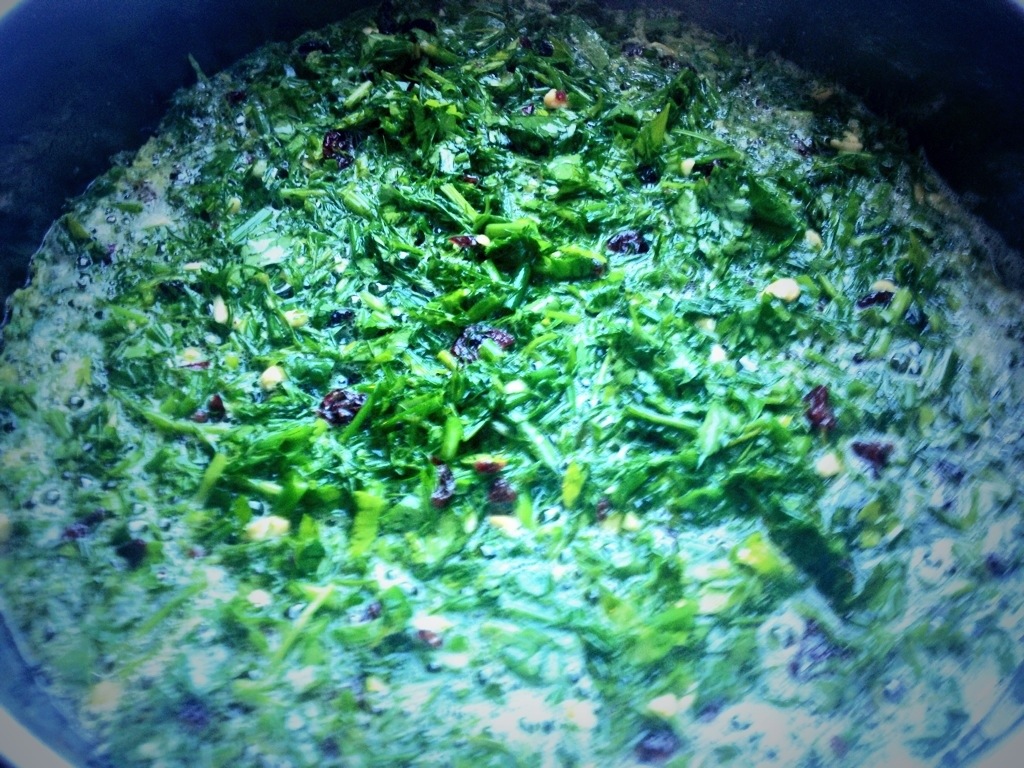
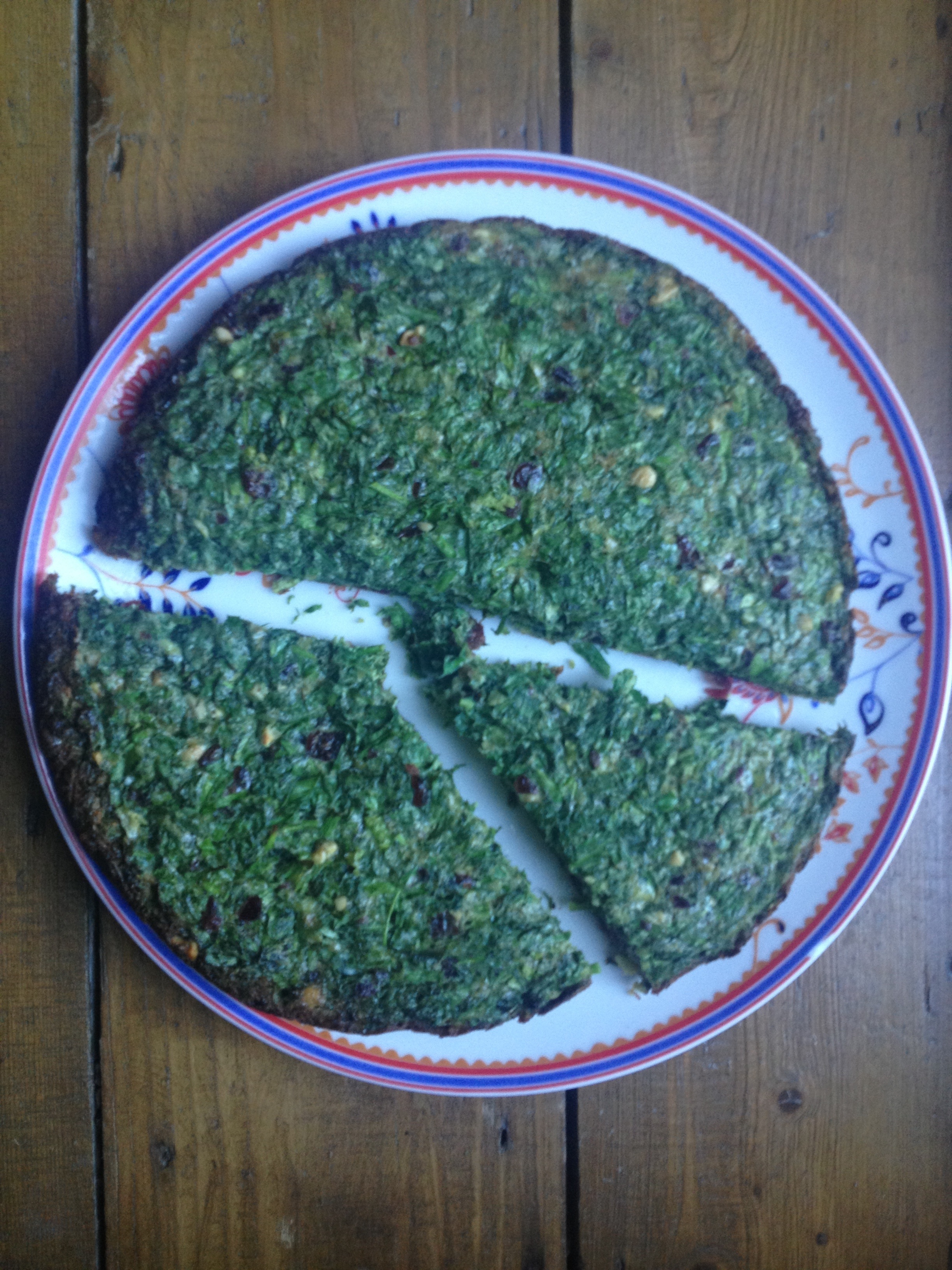
Kuku the Persian frittata
Yesterday my hungry belly and mind dug up a craving for a Persian frittata we recently tried in Bristol. I was reading about the Persians reaching the coastline of Pelion in ancient times in a book by Kostas Akrivos about Alfons Hochhouser, the Austrian pioneer of Eco tourism in Pelion. Funny how even historic facts turn to recipes in my world.
Kuku is an easy and delicious recipe. You need a large quantity of mixed herbs and eggs but the rest is very easy. It took me about 20 minutes to make. The result is a fragrant, beautiful and tasty dish!
Ingredients
Feeds four
3 cups finely chopped dill, parsley, coriander, chives or fresh onions
6 eggs
1 tsp turmeric
100g dried cranberries and cashews chopped
1 crushed garlic clove
1 tsp salt
1/2 tsp pepper
Knob of butter
Preparation
20 minutes
Preheat the oven for 10 minutes.
Chop equal amounts of all herbs and mix in ball
Beat the eggs.
Add the salt, pepper, garlic and mix.
Add the herbs , cashews and cranberries and mix.
Pick a frying pan that can be placed in the oven and melt the butter.
Pour the mixture in and lower temperature.
Fry for a couple of minutes until the sides start firming up.
Then place in the oven for 5 minutes in high temperature until it firms up.
Remove cool down and eat.
The frittata freezes well.

Pilgrimage to the sun #2-Spoon sweets and tips from the Aegean’s Balcony
Our time in Pelion was full of flavours, changes in scenery and surprises around each corner of its winding roads- a village, a forest, the sea, a character, some artwork. We saw Pelion’s Aegean waters tamed by heat and then turning familiarly choppy before we fled to Pagasitikos Gulf.
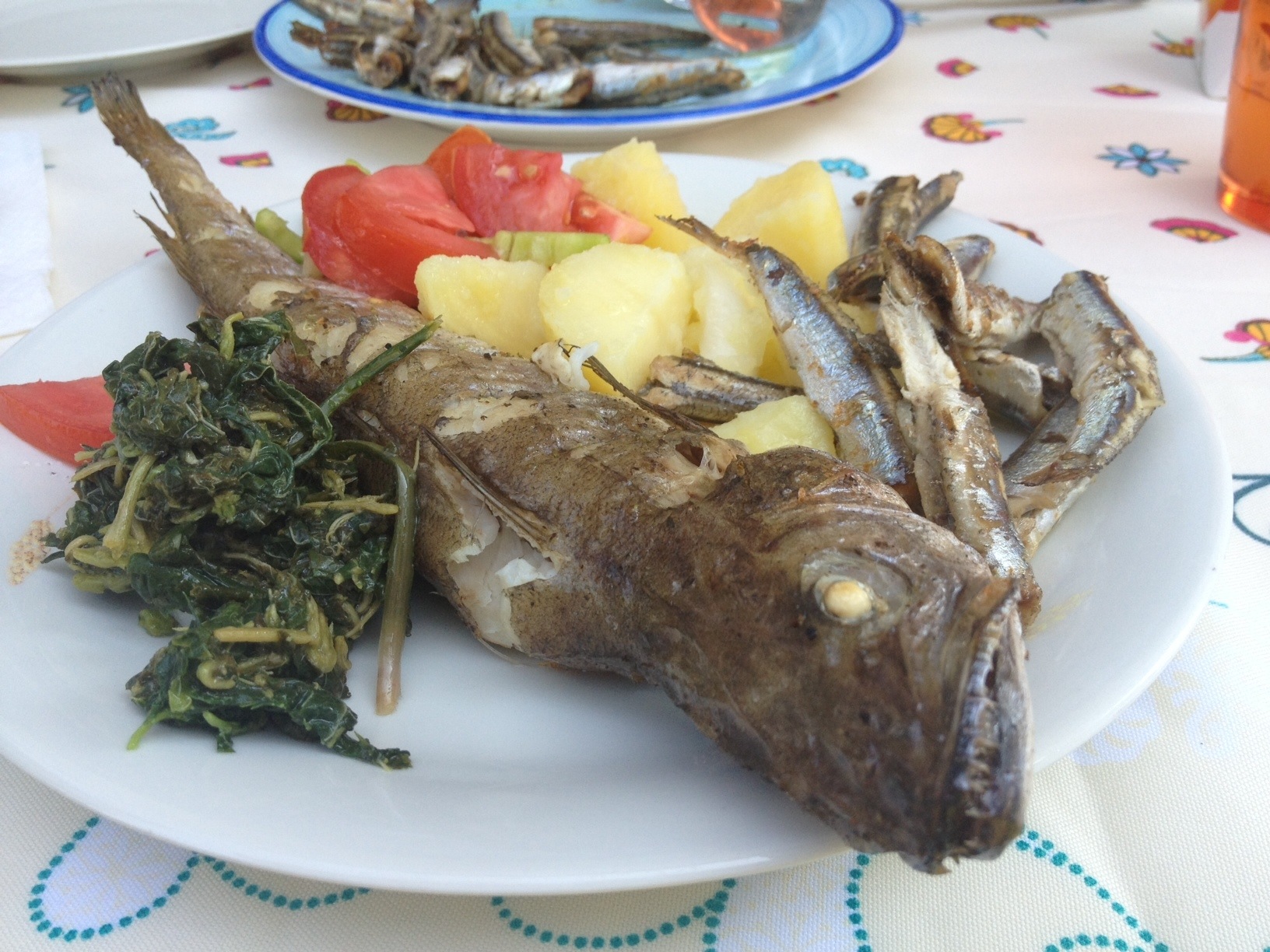
There is so much to tell you about Pelion. We spent nights on the beach bathed in the full moon after dining in the moonlight on the southern hill of Chorefto at Marabou – their homemade olive paste and salads are tasty and generous in portion. At the tavern Kima (Κύμα), Chorefto, we savoured the daily home cooked specials such as kanati and stuffed courgette flowers. We tasted an amazing wild green pie at Victoria’s café in Damouchari’s idyllic cove. We stayed as Foteini’s home in Damouchari who gave us herbs, courgettes from her garden to make a fresh tourlou. There we dined in candlelight, facing the lights of Ai Giannis and listening soft waves crashing on the sharp rocks, protected from the elements and civilization a little cove of serenity- I feared if we stayed there longer the mermaids would steal our minds. We discovered a stylish and creative coffee shop and art space when we found Karpofora in MIlies on our way to Afissos.
Almost three weeks ago on our way to Elitsa cove from Parisaina beach in Horefto we walked alongside olive groves hanging off the side of the mountain in North Pelion, Greece. We picked sage, bay leaves and gigantic super-lemons nourished by the sun-all two meters of Dan pulling down a branch so that I can pick the fragrant fruit. We ate wild figs from trees that fruited early. We breathed in herbs and sea salt.
We reached Analipsi beach on foot from Chorefto, passing the church and the beautiful Plimari Tavern (Πλυμάρι). We swam to Tourkolimano (accessible through water and the coastal path from Parisaina and Analipsi) and snorkeled along the rocks in the company of sea creatures. Then we fell asleep in the naturally shaded side of the beach and woke ourselves up with a swim and a coffee at the tavern. And finally at dusk we walked back to our base at Orlys and used our foraging ingredients for another home cooked dinner in the outdoor kitchen.
At Pouri village we woke up everyone when the dogs detected our mid afternoon entry. We climbed to the Nikolaou square, one of the tallest spots of the upper village, and the view took our breath away- the coastline all the way to Horefto where we started out from lay beneath us. Just as we were about to leave what seemed to be a closed coffee shop/tavern the jammed door open ajar and out came its smiley owner, Babis Lagdos.
At Babi’s ‘Balcony of Pelion’ in Pouri we had locally made Greek spoon sweets, cherry and walnut flavours. Greek spoon sweets are preserves made with local fruits (mostly whole), after their the seeds or stones are removed (e.g. cherries, apples but also baby aubergine). Otherwise citrus fruit with their peel and unripened nuts and seeds such as walnuts and figs are also used to make spoon sweets. Spoon sweet are called so because they are served and eaten with a teaspoon. If you go to Pelion or other Greek countryside places and you do not try the locally produced spoon sweets you should be punished! Not only would you be testing a local delight but you would also be supporting women cooperatives and local producers in the area. A spoon sweet is delightful with dark bitter coffee, on yoghurt or on fresh buttered bread.
We met and saw people who survive the changes of seasons, governments and life- reaffirming the inevitability of joy if your heart is open to it. Poets, cooks, wild campers, yogis, entrepreneurs, chilled locals, young hippies. So I cannot close this blog entry without mentioning Popotech (Ποποτεχ) and Gemma and Gerry.
About five minutes after leaving Pouri we drove past a big red sign and a man with a cap looking like a modern Sheppard in front of a red vehicle in what seemed a movie still or a scene that dropped out of the page of a book. In the backdrop I saw sunflowers, artefacts and colorful metallic structures dancing in the soft wind. We turned the car around and stopped on the road side. And so we met Gemma and Gerry and Popotech their art space, workshop and gallery. They live and work there summer and winter. In the past year they moved from Pouri and built their home on their own land on a hillside. They grow some of their food on the land and their inventiveness in structuring their workshops and house on a hillside is inspiring. The place is serene and beautifully wonderful, like an art playground for grown up children. Their company is a delight. And now that I think of it they must have lived in Greece longer than I have as I have been gone for sixteen years. I have no more words to describe Popotech and its two curators. This is their life, not just a transient show, and I would love to spend more time with them soon again. Take the road to Pouri from Zagora and keep your eyes wide open so that you don’t miss Popotech’s red signs on your left hand side. You won’t regret it.
Lia’s random facts and tips
- Kanati is a slow cooked dish with cubed beef and pork with some tomato sauce, lemon and herbs
- Make sure you try kreetama (coastal wild green) but also tsitsiravla (hill wild green) for a meze and a glass of cold tsipouro
- At every tavern or restaurant you visit always ask for μαγειρευτά (mageirefta), the daily home-cooked specials, to make sure you try the fresh local specialties and what is in season.
- If you drive to Elitsa or Analipsi it’s best to use the main road past Zagora. The ‘coastal’ road just about fits one car if there is oncoming traffic and it’s not a local you may be stuck for a bit.
- If you walk to Elitsa or Analipsi (Tourkolimano) go to Parisaina beach from Horefto (at the end of the Horefto beach to your left as you are facing the sea there is a small footpath). Then at the far left side of Parisaina beach look up to one of the beautiful house hanging of the cliff and you will see a cobbled road winding up the hill. I suggest you wear steady foot wear or at least shoes that cover your toes for a better grip.
- Parisaina is a wild camping beach that gets busy with people who still respect nature and their surroundings. There is a beach bar , Kripti, on the hill that offers water and drinks, but this is not a beach resort or lido. Please do not visit of you expect that. And also be prepared to through away your swimsuit. No-one will judge you if you don’t but I hope you feel comfortable to take it off and enjoy a nice swim in the crystal waters.
- You can also access Elitsa or Analipsi (Tourkolimano) through the local (dirt) road at the end of Horefto beach. It is also a beautiful route and perhaps longer but more shaded.
- Visit Pelion’s east side at full moon and watch the moonrise either from Parisaina beach or enjoy at Pouri, at Babi’s Balconi of Pelion tavern. If you are carnivorous he does a mean goat slow roast.
- Damouchari feels like an island and it’s definitely worth a visit but be warned it is on the more touristic side, in a tasteful way albeit.
- Damouchari is a good place to explore the many footpaths in the area, e.g. to Fakistra beach but also to the beautiful and large village of Tsagkarada. Be warned it is steep but worth every drop of sweat. You can hire a guide at Vistoria’s guesthouse and café.
- Horefto is the seaport of Zagora, Damouchari is the seaport of Tsagkarada so if you head for these destinations you will see sharp turns towards the sea.
- Originally we went to Pouri in search of locally produced cheese after locals told me there were some sheep owners and cheese producers there. Don’t expect little Deli’s and stalls in Pouri. My advice is to go to Babi, the owner of the Balcony of Pelion, when you arrive as he can source the cheese for you and a couple of days before you leave you can pick it up from the tavern.
- If you would like to stay at Foteini’s place in Ntamouchari get in touch with me. It is a unique experience sleeping at the wave at an old house with an interesting hostess.
Photo Galleries
Spoon sweets and Pouri


Popotech


Analipsi


Damouchari and Milies


Pilgrimage to the sun
My pilgrimage to the sun begun last week. I am in motherland.
I am currently in Pelion, Greece, the land of Argonauts and Centeurs, the land of mountain and crystal blue sea.
I thought this would end up a food pilgrimage with many food photos to share but nature has won me over. I bathe in the sea and walk up the steep hills with the excitement of a newcomer, as if I have never encountered such beauty before. As I write this we are getting ready to set off on a coast path hike to the beach of Elitsa (little olive).
I have no phone signal here but last night after wild camping in Parisaina cove Dan and I rested in a house (Orlys) overlooking the Aegean. So no phone signal but wi fi yes! Lucky you!
Last night in the outdoor kitchen we used giant ripe tomatoes to make a cinnamon and olive pasta sauce. We ate this with χυλοπιτες (hilopites) , short tagliatelle-like greek pasta flavored with saffron and paprika. I got very tipsy on chilled local rose table wine (non pretentious nectar-god I ve missed Greece and how it does not need to feign gourmet grandeur to offer you its delights).
And this morning our landlord , Rony from Tel Aviv, offered us γλυκο σύκο (fig sweet) which we spread on maize flour bread with yoghurt butter for breakfast.
To this day in Pelion these are my humble food highlights together with the salad of κριταμα (kreetama) , coastal greens, and κανάτι (kanati which means jug), slow cooked pork and beef in a light lemon and tomato sauce.
But as I am setting off to new coves and hills who knows what awaits me.
I am just so happy to be home.




A-not-so-Greecee-food-affair
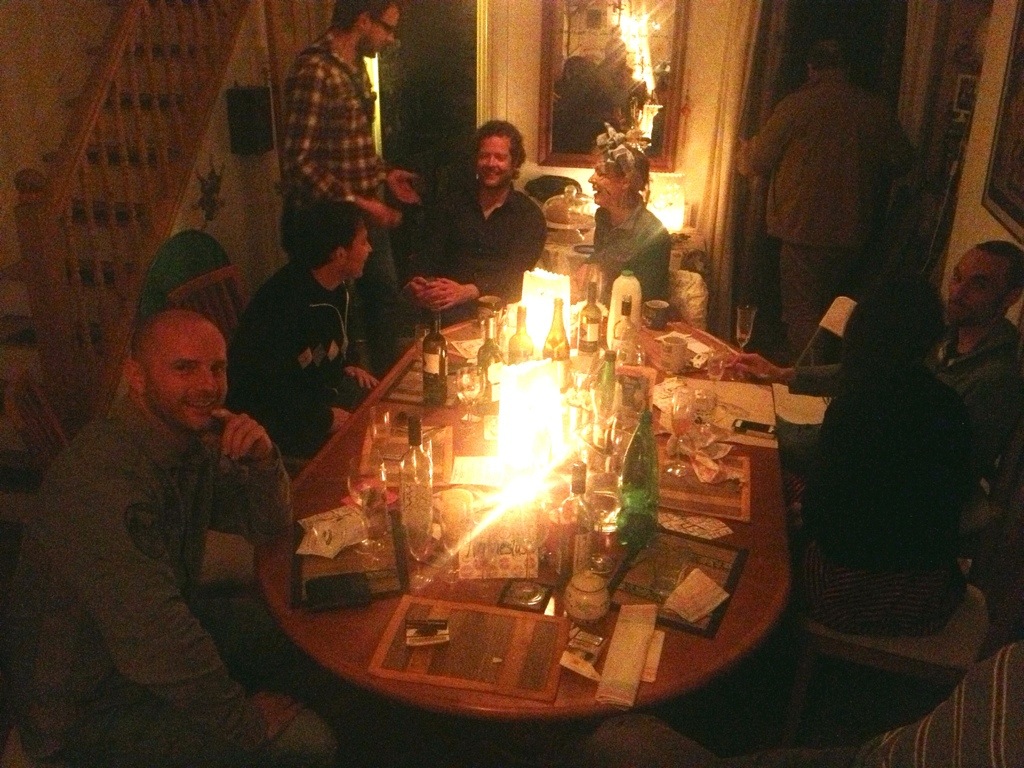
Last night the Greek gods of Olympus gathered around our table to savour good food and good company.
A-not-so-Greecee-food affair presented dishes that many people in Britain have a different cultural reference for like revithokeftedes (the Greek falafel), politiki salad (the Greek coleslaw ) and Aubergoni (Cycladic cannelloni-like aubergine parcels).
On arrival people were greeted with a glass of Nectar-a strawberry cucumber and lemon juice cocktail sweetened with honey. And we closed the supper with an almond meal and semolina cake doused in brandy syrup and served with ice cream.
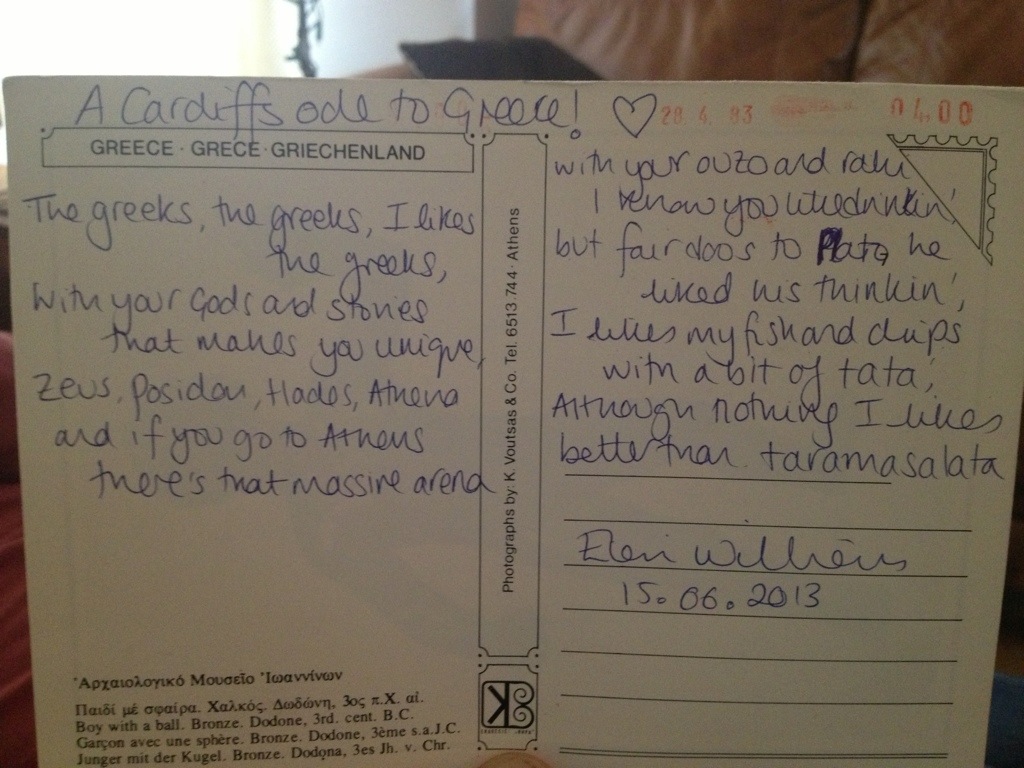
Everyone was an Olympian god last night-persona randomly allocated on arrival. And there was poetry (Cardiff’s ode to Greece), singing which included the very apt political song ‘Εν δυο κάτω’, learning your name in Greek and some interesting Greek facts relating to Nana Mouschouri’s vocal cords and private parts. I am still laughing!
Thank you all for such a wonderful night and honouring Lia’s Kitchen with your presence. I can’t wait for the next supper club. If they are all like this one we are in for a year of a wonderful evenings.
I hope the gods smile on you today .




Almond meal muffins for Dummies (like me)!
This recipe is for my colleague Ceri and the lovely Beth Woollam of Pure Bliss Bites (who are anything but dummies!)
Fact: I love food and indulge in it but with measure. So every now and then I try out new recipes and ways of cooking that are ‘good-for-you’. Almond meal is a great alternative to flour and great for baking. And almond meal muffins can be good for you because they have no sugar, no flour and no butter- a welcome break from sugar-heavy snacks.
I copied and slightly adapted this almond meal muffin recipe from a website called DAMY (she giggles) when searching for almond meal recipes on the tinterweb and it is fantastic! DAMY seems to be a weight loss programme. So in sharing the link to this page I would like to be clear that I am neither advertising the programme nor am I advocating dieting as an approach to life. I just like the muffin recipe.
I do understand the benefits and the necessity of diets for important weight loss or in response to health risks. But I think we should all adopt good eating habits as permanently as we can and if we can (I don’t forget intolerances!). I believe that improving our nutrition and a balanced diet can be good for everyone and our environment.
Almond Meal Muffin Ingredients
Makes 12 muffins/cupcakes
2 cups of almond meal
2 eggs
2 egg whites
¼ cup agave syrup or honey or maple syrup
½ tsp baking soda
¼ tsp baking powder
1 Tbsp apple cider vinegar
1 tsp vanilla extract
pinch of salt
2 Tbsp olive oil
1 cup blueberries
1/2 – 1 cup raspberries
Preparation
Takes 40 minutes in total
Mix all ingredients apart from the berries in blender or in a ball with a hand blender.
Fold in the berries.
Fill 12 muffin cups.
Bake for 25 minutes in a medium oven, 175 centigrade.
Lia’s Notes
- I used agave syrup but I think honey and maple syrup could change the flavour of the muffins.
- My mixture was quite runny and this is why I decided to add more berries. It worked.
- I used olive oil because I always have some in the kitchen. The original recipe calls for coconut oil which as I found out you should not melt unless the recipe specifies so. I think sunflower oil would be fine too.


What to do with ten kilos of onions
Have you ever ordered something in a half-asleep kind of way?
A few weeks ago when ordering pie ingredients from Cardiff Market I ended up with about 10kg of onions in excess even after cooking many caramelised onion pies. In the process of making the order I was wearing my astute-business-woman face, hiding tiredness from a long day at work. And the only thing I heard the helpful man say was ‘very little money for a lot of onions’ to which of course I said ‘yes’. It is unlike me to be imprecise with orders (on food or anything really) but this wonderful mistake gave me the opportunity to experiment cooking with a lot of onions within a short period of time.
Admittedly Dan and I will not have onion soup again for a while. But we gratefully savoured its thyme and wine flavours during a May week when the weather had turned bad, we got ill and the heating came on again. French onion soup recipes online are plenty but my version is closest to Elise Bauer’s one on Simply Recipes because I also use no butter. And on occasion I choose to leave out the garlic and also make Gruyere cheese toast on granary bread instead of baguette croutons.
The bulk of my excess onions however I turned into a spiced onion chutney. I almost followed a recipe from Allotment Growing Recipes but did not use as much sugar and added ground pimento berries, bay leaves, port and red wine. The result is a fragrant onion chutney that compliments strong and piquant cheeses competently and also works well with beef burgers. I converted and amended the recipe below for you.
Ingredients
Make up to 9 medium jars and about 4Kg of Chutney.
5kg onions (peeled and chopped)
800gr dark brown sugar
9 Tbsp olive oil
3 lemons, juiced
3-4 garlic cloves, minced
3 tsp ground cinnamon
3 tsp ground nutmeg
3 tsp ground ginger
6 tsp ground coriander
3 tsp ground cloves
6 tsp salt
3 tsp black pepper and pimento berries ground together
9 Tbsp balsamic vinegar
6 Tbsp malt vinegar
1 shot of red wine
1-2 shots of port
Preparation and jarring
At least 4 hours
Heat the oil in a 5lt pot, add onions and sauté for at least 10 minutes stirring occasionally.
Add the vinegars, lemon juice and spices and cook for 2 minutes.
Add sugar and then simmer uncovered for at least 3 hours.
Half way through cooking add the wine and port.
The chutney is ready when the liquid is reduced even if not fully evaporated- it will thicken when you stir.
About half an hour before the chutney is done sterilise jars.
Boil clean jars and their lids in bubbling water for 10 minutes.
Whilst doing that preheat the oven at 110 centigrade.
Line a baking tray with a clean towel.
Place the jars upside down on the tray using metal tongs.
Leave in the over for 15 minutes.
Ladle the chutney into hot, sterilised jars and seal immediately.
Label the jars when fully cool.
The chutney should keep for a year.
Lia’s Notes:
- Be prepared to peel and chop 5 Kg of onions for about hour if you have as small a kitchen as mine.
- I added the vinegars and lemons half an hour in the cooking process is as I was adding and sautéing onions gradually.
- Leave the lid off!
- Keep on low heat and stir regularly. Caramelised is good and burnt is bad.
- I put 800gr sugar but next time I’ll use less.
- Keep the jars in the oven if you have to wait a bit longer for the chutney to cook. The jars need to be hot if you are filling with hot chutney.
- Good instructions for sterilising can be found on Taste.com, an Australian website.
- The simple rule of jarring is to never add hot chutney to a cold jar and vice versa.


Lemons and how to preserve them
Today I am writing about an experiment. I have no clue whether it will work or not in its virginal attempt but I thought I’d tell you anyway because … I am excited. I have had a go at preserving lemons, which I can then use to accentuate the flavours of tagine dishes. And apparently I could even exepriment with cakes and deserts that use preserved lemons.
Lemons, their colour, their scent, their flavour, their overall character brightness, mean happiness to me. My friend Becks loves the Forsythia hedge in our garden for its yellow flowers and the tone of happiness they bring into our house. They light up the scene. Lemons and their sunshine hue have the same effect on me.
So on a gloomy day like this, when the sun might have gone on holiday to Spain, what better idea than to surround yourself with the colour yellow and cheer your self up! Have a lemonade and wear something yellow!
Ingredients for preserved lemons
Enough for a 10cm diameter jar and about 8 cm height
4 Lemons for preserving
1 Lemon for juice
1 Bay leaf
Some peppercorns
4 Heaped tbsp coarse salt
Additional coarse salt for jar layering
Preparation
20min and 1 month preservation (at least)
Wash unwaxed lemons really well.
Juice the juiciest of lemons. Then slice the leftover skin in strips.
Layer the bottom of the jar with a couple of heaped tbsp of coarse salt.
Cut the four lemons in four but avoid cutting through them. Cut along the middle of the lemon first and then across.
Pull the flesh of each lemon open and add 1 or more tbsp of heaped salt inside it.
Add lemons to the jar snuggly and top with more coarse salt.
Sprinkle with peppercorns between layers.
Add bay leaves to the sides of the jar.
Top with strips of the juiced lemon flesh and top with more salt.
Pour the lemon juice over the contents of the jar.
Push down lemons with a wooden spoon to bring lemon juices out.
Seal and wait patiently for at least a month for your lemons to preserve.
Lia’s Notes:
- You can also use limes. I added one lime to make the experiment more interesting.
- Salt takes away the lemons bitterness. Same effect it has on aubergines when you prepare them for cooking.
- You can keep preserved lemons for about a year.
- My tinterweb research reveals thta Meyer lemons are the best for preserved lemons. I just used what I had.
- I decided to use flavourings inspired by Snowflake Kitchen’s Blog and as I have bay leaves in abundance all year around.
- Zoe English makes the best preserved lemons I have tried. Fact. She has ecnouraged me to do my own. Who she is I am sure you will find out soon 🙂
- Punk Domestics, a directory of cooks and community activity and a gateway to cookery blogs, is how I learnt to preserve lemons.
- Through Punk Domestics, I filtered down my preferred preserved lemon recipes which in addition to Snowflake Kitchen’s Blog can be seen on the One tomato, two tomato, The view from the Island (with star anise) and Head Space Canning blogs.
- Enjoy preserving sunshine!
![lemons[web]](https://i0.wp.com/liaskitchen.com/wp-content/uploads/2013/04/lemonsweb.jpg?w=231&h=231&crop=1&ssl=1 "lemons[web]")


 Lia's Kitchen
Jacob’s Market Art and Dining Supper Club
Posted on Updated on
This time last week we were taking down our pop-up restaurant and packing Lia’s Kitchen for a return home after a successful art and dining fundraiser and one the happiest birthday’s of my life. Thank you so much for overwhelming us with support, we were fully booked with a waiting list and a few spectacular late night reservation ‘wars’ took place for the last few places at our dinner table.
To all our guests I have to say thank you, you made the atmosphere of the night so wonderful. Thank you to our lovely friends some of which travelled from London and Plymouth for this !!! But even though half the people there we had not met before and they did not know each other, when I walked in to greet everyone before we started eating I was welcomed by a relaxed and comfortable vibe. ‘How wonderful’, I thought, ‘it’s worked!’.
So that you know you have helped us raise enough dosh to cover all our expenses for setting up the pop-up restaurant and to contribute to the fundraising for the community art project in Ghana. There will be more events coming up and you can always purchase a Ghana print from Dan Green Photography to support the art project , see here.
I am so moved and impressed that we have set up and delivered this event in our spare time. Jacob’s Market opened their doors to us- thank you Liz, Ian and Mike (for your wonderful bar and cocktails)! Dan Green set up and took an exhibition of prints and pasting of images from Ghana in 24 hours. Our friends worked so hard with us- Martin chopped and cooked tirelessly. Becks was the best maitre’d with her calm assertiveness. Peanut and Dan rocked the floor and were fantastic hosts. Beth was a joy to work with and gelled wonderfully with the team shifting her attention where it was most needed. And my lovely Elpida, was a rock, washing, serving, tidying and being there to the bitter end.
Some people have asked me whether I am mad holding this event on the eve of my birthday. To this I happily respond that I probably am. But this was the best birthday ever because to see people coming together to support art and food ventures, to see them loving the food and the environment we set up in a white walled gallery is precious. And because I shared a sense of achievement so big with new faces and people I love. I guess it is true that joy when shared is magnified by a million.
See you on 26 October at The Pot, Crwys Road, for the next one!
Share this:
This entry was posted in Comment, Events and tagged jacobs market, liaskitchen, popup event, supper club.