
Comment
A year of health and St Basil’s lucky coin of justice
I just stored my lucky New Year coin protectively like a precious blessing. This year the coin will bring us health -this is what the New Year’s cake promised when we ceremoniously cut it on the 1st January 2013.
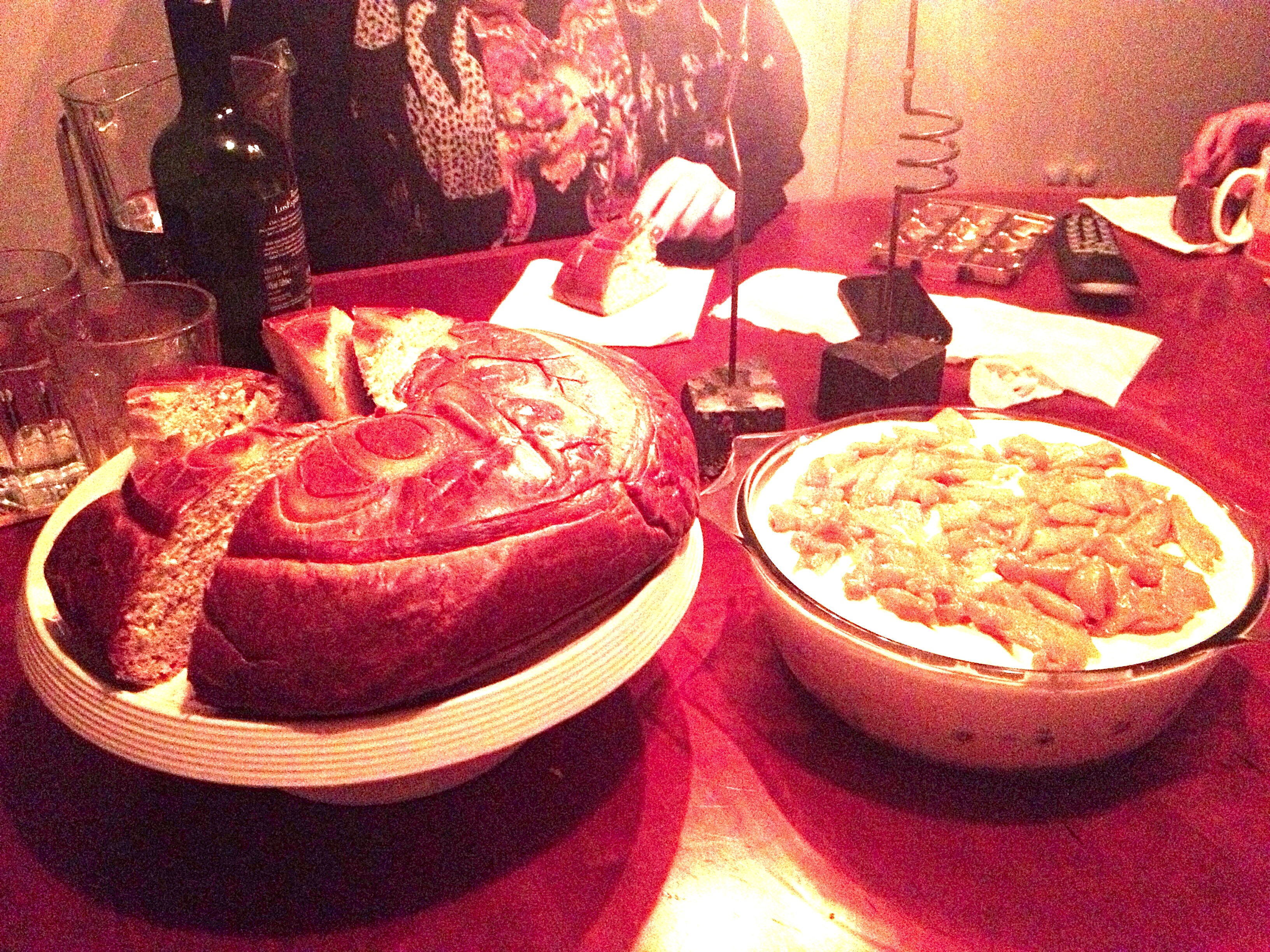
Every New Year’s Day-when we slice St Basil’s cake and eat through its aromatic brioche texture, flavoured with mastic and mahlepi, in search of the lucky coin- my British and other non-Greek guests ask where this tradition comes from and what it really means.
The person who receives the coin is destined to have a year of great luck. And every so often the coin falls to a special piece cut for the house or, like this year, for health.
So why do we do this?
The cake is named after St Basil who may have been the real Santa Claus (not the Coca Cola one) and who was an archbishop in Cappadocia. When Basil took over his post he realized that great injustice had been done to his town people through high unjustified taxation -that rings a bell does it not? To return town folk their fortune and to overcome the obstacle of how to identify the owners of the different items Basil decided to bake a massive cake and to place their precious stones, cold and coins in the cake. He then invited the whole town to a big celebration where that cake was cut ceremoniously. The myth says that miraculously each person received their own possessions in the piece given to them. After Basil died the cake ceremony became a tradition.
Tonight, well into 2013, I am contemplating my luck of which I have much. I found this a picture of this year’s New Year dinner and my lucky coin and thought I’d share my good fortune with you.
Be lucky, healthy and happy.
This entry is dedicated to Tom (28), Vaggelio(37), Lucy(32) who left us in the past seven years; to Pavlos and my wonderful aunts Claire and Ellie who beat and are beating cancer; and to our mental health which we all still have because of our own courage and the love of our friends and family.
Back to a classic: tomato sauce
I can think of a few things as comforting as a tasty tomato sauce poured generously over spaghetti. So for your convenience here is the quick recipe that has received top hits from all of Lia’s Kitchen readers in 2012.
https://liaskitchen.com/basic-tomato-sauce/
And if you fancy a variation don’t forget another favourite: Lia’s Kitchen carrot and tomato red sauce.
Enjoy!
Crisis kitchen
No food today folks…
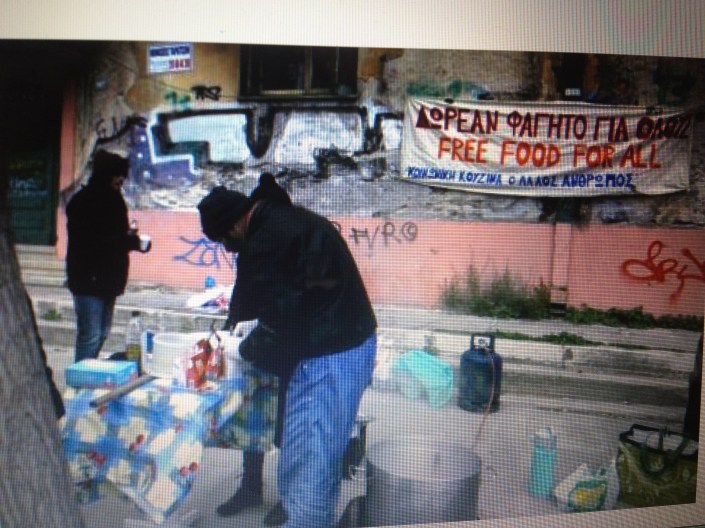
Today I saw photos of soup kitchens in Greece, again, with long and growing queues: this is not news it has been happening for a long time now, did you know about it? I heard about how small business owners gone bankrupt keep silent about their unemployment, too ashamed of the stigma. The stated unemployment percentage in Greece must be inaccurate with so many people keeping silent: there is no hope of help or social welfare. Not to mention the taboo of accepting charity help. In Greece, just around the corner from you, there are more and more stories on the steep increase of homelessness; parents giving up their children to social services; suicide on the rise. I saw images of protest on the streets of various cities in Greece on 10 February 2012 and massive protest banners adorning the Acropolis . And everyone if gearing up for massive protests.
When I left Greece 15 years ago, for what I thought then would be 3 years of British education, I could not have imagined this fate for Greece.
My parents were annoyingly hard-working. I remember their frustrated conversations about growing tax evasion and their comparatively high tax bills: they felt naïve and were sometimes mocked for their lack of ‘courage’ to evade tax. Do I believe that tax evasion is the only reason Greece is where it is? No, I think it was a symptom as well as a cause.
Can I comment about what is happening in Greece today? Unlike other Greeks all I have only been a professional adult in Britain; it is only through my parents, family and friends’ experience that I can comment. When some of my Greek friends, having been educated or worked abroad for a while, started making their way back ‘home’ in the early noughties-to make art; be lawyers, doctors, teachers; start businesses, or families; or just be with their families, or just to be-I stayed on. My choice until recently baffled quite lot of people but nowadays no one asks me why I am here. No disrespect but there is not much I will bother saying about my choice: it has been personal and therefore right; and had nothing to do with jobs, status and money, or indeed this crisis. Of my Greek friends who have returned to homeland, very few had a painless transition –sometimes being treated harshly for their choice of foreign education, and faced with nepotism and lack of meritocracy, even gender prejudice-and now they are getting this: an undignified financial junta, a monetary dictatorship, the loss of their dignity, a situation that seems to be going nowhere. Has part of the problem been that many Greek families and people contributed their money to the foreign economy through, e.g. education, rather than investing funds and skills in Greece? Some think so… I have reached no conclusion, and if yes I have contributed to this problem.
I am trying to understand what a solution to Greece’s demise might be: is the only dignified way out to default? I honestly don’t know, but it seemed to be the better choice for Argentina.
Still, I am particularly angry that my 75 year old father is at risk of being deprived of much deserved security in his older age: a man that has been working since he was 13; and who already experienced 2 recessions; a civil war and the end of the Second World War in Greece.
But as allegedly the UK is also entering another recession phase and unemployment in Wales particularly, but also across the UK, is rising, I once again conclude this is a global problem not one of or caused by Greece: to think otherwise is naïve and insulting to one’s intelligence! And I wonder what is to hit the UK too, after all the other countries queuing up for harsher times: after all personal debt in the UK is a lot higher than that of the Greeks. The past few years here seem resonant of the decade Greece went through before recession; there is a welfare state, but the family structures are not as tight. Once I swore never to make the mindless sacrifices to my personal life that my parents made for me. Ironically I now find myself working to pay hight taxes, a ridicuous mortgage, and bills; and not being able to entertain even the thought of some these mindless sacrifices.
So the question I pose to you wherever you are is:
How is it that across this world we accept to be governed by an incomprehensible force of fictional markets, a system that made very little sense until its collapse, and still remains nonsensical and ludicrous? It feels like a live version of monopoly, where countries like Greece are waiting for a get out of jail card…in vain.
My father stoically says that we will all be ok: I can hear him smile when he says this to me on the phone. On 12 February 2012, Greece will see mass protests. Tonight we all get on with our moods and lives as always: we will be ok but this does not mean we remain unaffected and indifferent. So that you know…
Recommendations:
‘The Argentina experiment’, an excellent documentary made by the Exantas team in Greece who visited the country ten years after recession and in the depth of the Greek Crisis.
Soup kitchens and stories of a growing number people seeking free meals in Greece in English
For the Greeks: Pandespani blog’s fantastically sarcastic and intelligent entry
As usual Kostas Kallergis site about the Greek Crisis: When the Crisis Hit the Fan
Guardian’s 10 February editorial about the crisis, the euro and Greece
My previous blog on our crisis: a recipe for destruction.
Petra and a Chickpea and Kale curry recipe
How did Petra and her recipe enter my life? How do you summarise a friendship?
I will never forget the first time I saw Petra’s smiley face in the corridors of City and Regional Planning, Cardiff University, when she came over to Wales as a visiting researcher. I remember long nights with emotional conversations and loud laughter. I remember dancing at the Toucan on St Mary Street and Journeys on Clifton Street.
In August 2011, I found Petra again. Crete returned to me a friend, as well as serenity and a sense of home. But then again that is also what a good friend gives. I hugged Petra tightly after 5 years during which our individual journeys were coinciding and sometimes merging in the ether, without us knowing: searching, coping, understanding and finding.
In Crete, the land that generously offers good food and sun, we met and talked about food, love, life and dreams again. It’s good to be reminded of all that bonds you deeply with another person.
My friend Petra loves food, cooking and life. She is also a rural sociologist who is passionate about sustainable food and approaches the subject from a cultural angle: understanding cultures and consumerist patterns, and changing attitudes. She teaches and researches at the University of Wageningen, the Netherlands and build a ‘Food Cultures and customs’ course in 2010. And last year Petra was also a part-time organic farmer for the growing season. What a woman!
Petra writes for a couple of blogs: the rural sociology group blog, university of Wageningen and Pure Food links, a sustainable food network blog. Recently, she visited Brasil and, in a couple of entries at the end of October and November 2011, she tell us about national school food programmes, and particularly Dos Irmáos School ,the Rio Grande do Sul, which she visited. Legislation requires that 30% of fresh produce used in school food comes from local farms: shortening the supply chain with various possible good impacts for the environment, economy, etc. springing to my mind at first glimpse.
Apart from the curry she recommended this month, when I think of Petra and food two dishes spring to mind: garlic and chilli prawns served with fresh bread, and roast lamb. I remember a roast lamb dinner when suddenly it dawned on us that everyone around the dining table was a Libra, with the exception of me who was born on the cusp: what a strange coincidence that so many of us hanging out regularly, making lasting friendships, were born within a month of each other either in the same year or a couple of years apart either way.
I adapted Sarah Raven’s chickpea curry recipe recommended by Petra and whilst cooking her felt presence in Cardiff once again.
Ingredients
- 1.5 -2 cups of brown rice
- 3-4 cups of boiling water
- 2 onions
- 5 garlic cloves
- Approx 500 gr of green and purple curly kale
- 2 tins of cooked chickpeas (drained well)
- 2-3 carrots, peeled and chopped
- 2 small sweet potatoes peeled and diced
- 2 tspns, spice of life curry mix
- Approx. 50 gt grated ginger
- 1 red chilli pepper
- Approx. 250gr mixed mushrooms (portabella and chestnut in this occasion)
- 1 stick lemongrass
- Juice and zest of 1 lime
- 1 tin of coconut milk
- 1 bunch fresh coriander
- A pinch of shrimp paste
- Some paprika
- Salt and pepper to season if required
- Put the rice on to simmer: its preparation should take as long as cooking your curry.
Preparation:
- Remove the stems from the kale and chop the leaves in strips. Blanche or Steam them for 5 minutes, drain well and set aside.
- Peel, chop, dice and steam the carrots and sweet potatoes for 10 min. Drain and set aside.
- Fry the onion gently in the oil until soft. Add the curry powder, fresh ginger, chili, salt and pepper and stir.
- The Spice of life curry powder I used is mixed in house by Gareth, in house, and contains coriander, cumin, fenugreek, garlic, paprika, turmeric, pepper, curry leaf, asafetida, ginger, chilly, mustard, cassia, cardamom, mace & bay.
- Next, add the garlic and then the mushroom, lemongrass and lime juice and simmer for 5 minutes.
- Add the cooked chickpeas (drain and rinse tinned ones), coconut milk, mushrooms, shrimp paste and simmer for 15 minutes.
- Finally add the kale to the chickpea mixture. Sarah Raven’s sauce adds soy and fish sauces at this stage, but I replaced this with just a bit of shrimp paste, the size of a very 2 peas.
- Scatter with coarsely chopped coriander, over a good portion of rice.
Tip: I froze a couple of portions of the curry and save for yummy lunches this week. This dish was as delicious when defrosted and consumed two weeks after I cooked it.
Everybody is doing it …
What a couple weeks these have been. I have been working, meeting, talking and writing non stop in my day job and for other endeavours: research, analysis, re-editing and a talk all on things water-related.
I have not been idle in the kitchen too: it has been my down time. Filled peppers, with wholemeal rice, mushrooms and lentils are cooking in the kitchen as I write this. And I have cooked and photographed a chickpea and kale curry that I will share with you this weekend: a recipe that my dear friend Petra Derkzen left as a comment to the Amok Curry recipe on this blog.
In a recent email conversation about my food blogging a friend said, ‘Everybody is doing it (blogging) at the moment!’ And right you are Mrs Winnard, as we say in Cardiff. Everybody is doing it and what a sterling job they are doing too!
I have discovered the entertaining food ramblings of Joanne, a medical student in New York, whose writing is intimate. Eats Well with Others is personal and entertaining: an emotive diary of an intelligent young lady who dazzles us with her skills: an athlete, a cook, a down-to-earth woman and a hard working medical researcher. Today’s recipe on Joanne’s blog is a parsnip and carrot soup, with a great photo for the entry.
My second discovery is They Draw & Cook, a blog both ingenious and unique. It merges art, cooking and design in the perfect visual recipe. Artists from around the world have submitted illustrated recipes they have drawn and designed and illustrated, and there is a map that pinpoints where contributions come from. This is the baby of Nate and Salli , the photograph of whom is really telling of affinity and friendship. Big up to both. And another great thing is that artists who submit their work and receive royalties for any print sold.
We love bites is another recent discovery: the blog of fellow Cardiffian, Rachel Kinchin, who also writes a vegetarian food column for WM Magazine in Wales. Rachel’s writing is warm and ‘tasty’. She writes about ‘snazzy eats’ and her adventures as a ‘seasoned vegetarian’ and ‘passionate amateur cook’. It’s quirky and I love the latest tagine recipe that she has executed and photographed for the blog. I hope to read more of your ‘vegetarian shenanigans’ and to meet you soon Rachel.
And last but not least, I want to tell you about Pandespani, the name of which, Pan di Spagna, means sponge cake and, believe it or not, is my favourite cake of all: particularly when dunked in dark strong coffee! Pandespani successfully makes gourmet cooking simple and approachable: ‘cooking seriously, for fun’ is the blog’s catch-phrase. Recent tantalising entries include white chocolate fudge with oreos and French onion soup. Mmmm! The blog comes mainly in Greek but is also translated in English by Fyllosophie. The contributions come from lady Pandespani and Mr Greekadman, and strike a cord with me. Pandepani seems a product of friendship and fun. Perhaps I have imagined this, but I recognise hybridity in the language and also style of the blog: of fellow Greeks that have also lived abroad possibly? Is it by luck that lady Pandespani talks about the ‘various expressions of her perfectionism’, refers to Greekadman’s ‘self sarcasm’ and Fyllosophie’s ‘competitive Welsh humour’? Traits that, unexpectedly perhaps for some, to me emphasise the compatibility of Greek and British cultures. And just a day ago Greekadman left a message on my blog, ‘Here’s to the Greeks in Wales’, he said. You three: I wonder what your story is? And I can’t wait to hear it!
Roll on 2012
Choosing photos taken by Tom Beardshaw and Dan Green on New Year s Eve party to share with you has proven a lot more difficult than I thought! I spent most of my Sunday afternoon selecting images, deleting them by mistake (oops!), trying to recover them, and remember what I need to do to reduce photos in size…arghh!!!
Perseverence has paid off but I am exhausted. So the two cabbage roll recipes that I also wanted to share are not typed up yet and will be with you early in the week. Photography is no simple task for my mind. Mr Green I am in awe of you- I don’t know how you do it! I takes me ages to even put a slide show together online.
This slide show captures a few moments of our wonderful evening on New Year s Eve. I love Tom s photos and have deliberately chosen some blurry images because … well this is how I remember some of the night! Love to all particularly my lovely guests and stars of our night x
PS-Thanks to Tom Bearshaw who picked up the camera and document much of the night. And thank to my lovely Dan Green for teaching my some editing basics and providing some food snaps.
PPS-apostrophes and other symbols are not working on this laptop at the moment…this might explain the chosen syntax of this blog entry.
Food trivia ♯1: Introducing Dondurma or Kaïmaiki (Nτουντουρμας or Kαïμακι)
Doundourmas or Kaïmaiki is something I never thought I’d hear discussed on British TV but QI Christmas show offered its guests dondurma ice cream asking them to identify the ingredient that gave it its unique flavour.
Doundourmas is a favourite ice cream flavour in Saloniki, Northern Greece, where I am from and originates in Turkey. There are many sweet shops in Thessaloniki that offer it freshly made. I adore its creaminess.
This ice cream is a marriage of flavours of the East, a clear example of the hybridity of our cultures. It is flavoured with salepi (σαλέπι), wild orchid flour, and mastic (Μαστίχα), resin of gum tree.
Mastic is simply a magical ingredient, the gift of gum trees. When I was growing up we mainly had natural chewing gums made from mastic. As an ingredient it is used to prepare many cakes and sweets in Greece, such us Loukoumia or tsoureki (a Greek Brioche cake). There are some beautiful liqueurs made in Greece with mastic, a recent favourite of mine is one also using cinnamon.
Salepi is an ingredient that is also used for a hot winter drink still offered by street vendors in Saloniki, and as I remember when I last visited the place, also in Istanbul. It is thirst quenching and warms you up quickly in the depth of winter.
The funny thing of course is that Salepi, as I found out just this Christmas, actually means ‘fox testicles’ in Turkish, as orchis in Greek actually means testicles. So the Turkish very cleverly adapted the name of the orchid used to make this flour.
RBUKGSCUVAHC
Happy New Year
With a recipe for a colourful, festive Quiche.
I am sitting here dunking a piece of Terkenlis caramel brioche cake (Tsoureki) in a mug of warm coffee and looking at the photos of yesterday’s New Year Eve dinner party. I want to keep them all. They capture our fantastic spread of dishes and the laughs, hugs and dance of all of those who shared the last hours of 2011 and the first moments of 2012 with us. My kitchen is still filled with leftovers from last night patiently awaiting the return of some of our guests for a New Year Day film night.
To my left there is a plate with the remains of a spinach quiche portion that I munched on for brunch. It is so delicious and as I recenty photographed the stages of Quiche making I thought I should share the recipe with you today.
I love New Year’s Day and its sweet, indulgent fatigue from the celebrations of the night before. For its freshness and glimpse of endless possibilities in the coming year. A big thank you to all our loved friends for offering us such warmth and joy yesterday. And a Happy New Year to all of you! Xxx
A recipe for a spinach quiche
It is easy to make quiche from scratch. I think quiche is a diverse and impressive dish, ideal for dinner parties and light lunches.
On New Year’s Eve, I experimented with wheat free organic flour to make a crunchy pastry. This was a lighter alternative to the traditional Pâte Brisée pastry using buttery margarine (mixed with buttermilk) instead of butter. If you don’t want to make the pastry you can put a quiche together in no time using ready-made short crust pastry from your local shop. If you want to make everything yourself you need approximately 1.5hrs.
For a wheat free short crust pastry prepared New Year’s Eve 2011
(from Doves Farm Organic)
300g gluten and wheat free plain white lour blend
150r margarine flavoured with Buttermilk (or plain margerine or butter)
6tbsp water
2 pinches of salt
Mix the margarine with the flour until it resembles breadcrumbs. Add the water and knead the pastry lightly in a ball of pastry. Wrap the pastry in a cling film and leave to rest for 30 min.
For a Pâte Brisée pastry (from the SilverSpoon cook ‘bible’)
250g Plain flour, plus extra for dusting
175g butter, softened and diced
1 egg, lightly beaten
2 pinches of salt
Mix the sifted flour and salt with the butter. Rub with your fingers until the mixture resembles breadcrumbs. Shape into a mound and make a well in the centre. Add the egg and knead lightly with your hands. Wrap the pastry with cling film, flatten with a rolling pin and leave in the refrigerator for 30 min.
The dark colour of pastry in the images used for this blog is because I used Einkorn wholemeal plain flour in a previous occasion. Whilst this is tasty and very filling version of Pâte Brisée you might find it a lot heavier to digest than the white plain flour version.
For a colourful quiche filling
300gr Spinach or red chard
1 red pepper (either bell or sweet red pepper)
1 bunch of spring onions or a leek
4-5 mushrooms chopped (optional) or some chopped Kalamon olives optional
150-200g feta cheese
50g Cheddar or Parmesan cheese
Salt, pepper to season
2 pinches of nutmeg
250ml double cream
4 beaten eggs
Pinch of salt
The preparation
Pick your pastry: ready made or one of the above recipes. Roll out on a floured surface or simply place into the baking dish with your fingers-this might be easier for the wheat free flour pastry, which is more crumbly. For this amount of pastry you need a 28cm (diameter) tart or quiche baking tray.
Blind bake the pastry for 15-20 minutes in a very hot preheated oven. To blind bake: lay some baking parchment on top of your pastry and fill tightly with baking beans. My baking beans are a large bag of tarka daal, which I keep in a large jar after blind baking and reuse.
Whilst the pastry is sitting or even whilst you are blind baking it, prepare your filling.
Fry the sliced spring onions or leek in a little bit of olive oil and add a pinch of salt. After a couple of minutes, add a sliced red pepper, and follow with the chopped mushrooms (if you are using). Add the roughly chopped spinach or red chard and sauté until it wilts. Sautéing all ingredients should take approximate 10 minutes. If you are using olives now is the time to add them. Add the nutmeg. When the mixture has cooled down crumble the feta cheese in and add the grated cheddar or parmesan cheese.
Mix the cream with the 4 beaten eggs. Add some freshly grated pepper.
Once your pastry is prebaked remove the baking beans and baking paper, and lay the spinach or chard filling evenly on the base. Pour the cream and egg mixture. Bake in 180 degrees Celsius , gas mark 4, for 40minutes.
Once baked cool for at least 15 minutes before removing from the baking tray and slicing.
- ← Previous
- 1
- 2
- 3
- 4
- Next →
 Lia's Kitchen
Recipe postcards from Lia’s Kitchen
Posted on Updated on
It’s happening !
I have written my own little recipe cards and will be presenting and selling those at the Art Car Bootique at Chapter Arts Cardiff on 14 April 2013.
The cards are designed by the fantastic Mr Twang of http://twangdom.com/ , to whom I owe many thanks. You are extremely talented and intuitive with a great feel for what your client wants.
Some of the photos are by another talented artist Dan Green at dangreenphotography.com but also by moi! It’s all done in my kitchen so the food is real and all eaten soon after it’s immortalized.
If in Cardiff, Wales on 14 April drop by Chapter Arts . Meet us (me, Twang and Dan Green) and meet the recipe cards!
Share this:
This entry was posted in Comment, Greek cuisine, Recipes and tagged easy recipe gifts, Lia's kitchen cards, Recipe cards, recipe postcards.