
Recipes
May’s Recipe – Vegetarian Mageiritsa, a Greek soup of greens and mushroom

May is the period of the hungry gap but at Blaencamel Farm where, during this period of summer anticipation , they continue to grow nourishing greens. Gem and pink, and green Battavia lettuce have appeared on the stall. There is spinach, sweetheart cabbage, wild and green garlic. Whilst the seasonal bouquet garni can complement the dill that makes this spring soup so special.
May’s recipe is a Greek traditional Easter soup with a Welsh and clean-eating twist! Mageiritsa is traditionally cooked with lamb’s liver and plenty of greens and salad leaves. This is a vegetarian version and could be made vegan if you choose to not use avgolemono, the egg-lemon sauce typical of many Greek recipes. If you live in Wales what makes this Mageiritsa extra special is using dried kelp from Pembrokeshire. And the final Greek note is the use of the tangy and sharp sea buckthorn berry, which is becoming a staple in my cooking this year.
Visit www.liaskitchen.com for more ideas and monthly seasonal recipes inspired by Blaencamel Farm’s crops.
Ingredients (4-6 portions)
- 1 onion, finely chopped
- 1 -2 leeks, finely chopped
- 1 green garlic or 1 bunch of wild garlic
- 500-700g finely chopped mixed Blaencamel greens, such as spinach, lettuce and/or sweetheart cabbage
- 500g mushrooms, Blaencamel farm or chestnut if they are not available
- 1 punnet of mixed Blaencamel farm herbs (fennel, sage, mint, thyme) (Optional)
- 1 finely chopped bunch of dill or 1 tbsp. tried dill
- 2 Tbsp. uncooked rice
- 1 heaped tsp. Pembrokeshire Beach Company Kelp or other dried/crumbled sea weed (optional)
- 1 tsp. sea salt
- ½ tsp. ground black pepper
- 1 tsp. sea buckthorn berries roughly chopped (optional)
- Extra virgin olive oil
- Around 2 litres of stock
For the Avgolemono sauce:
- 1 small egg
- Juice of one small lemon
Preparation (45 minutes)
- Coat the base of a deep pot with olive oil and sauté the onion and leeks with one teaspoon of salt until soft and translucent.
- Add the cubed mushrooms (2 -3 cm chunks) and sauté for 2-5 minutes.
- Add the finely chopped herbs, wild or fresh garlic and greens, and stir fry for a couple of minutes.
- Then add the stock, stir well and (if you are using) add the dried kelp or other sea weed, pepper and sea buckthorn berries.
- Simmer for about 10 minutes and then add the rice.
- After 20 minutes (when the rice has softened and soup has thickened) remove from the hob.
- Beat the egg really well until it is fluffy and creamy (around 5 minutes), and whilst you continue whisking gradually add the lemon juice.
- Take one ladle of hot stock from the soup, strain through a fine sieve and add the hot stock slowly to the egg-lemon mixture whilst still whisking on low speed or by hand.
- Finally add the thinned egg-lemon and stock juice to the hot soup stirring in well to make sure it flavours and thickens all of the soup.
- Taste and adjust the seasoning if needed.
April Recipe – Spinach, chard and leek risotto
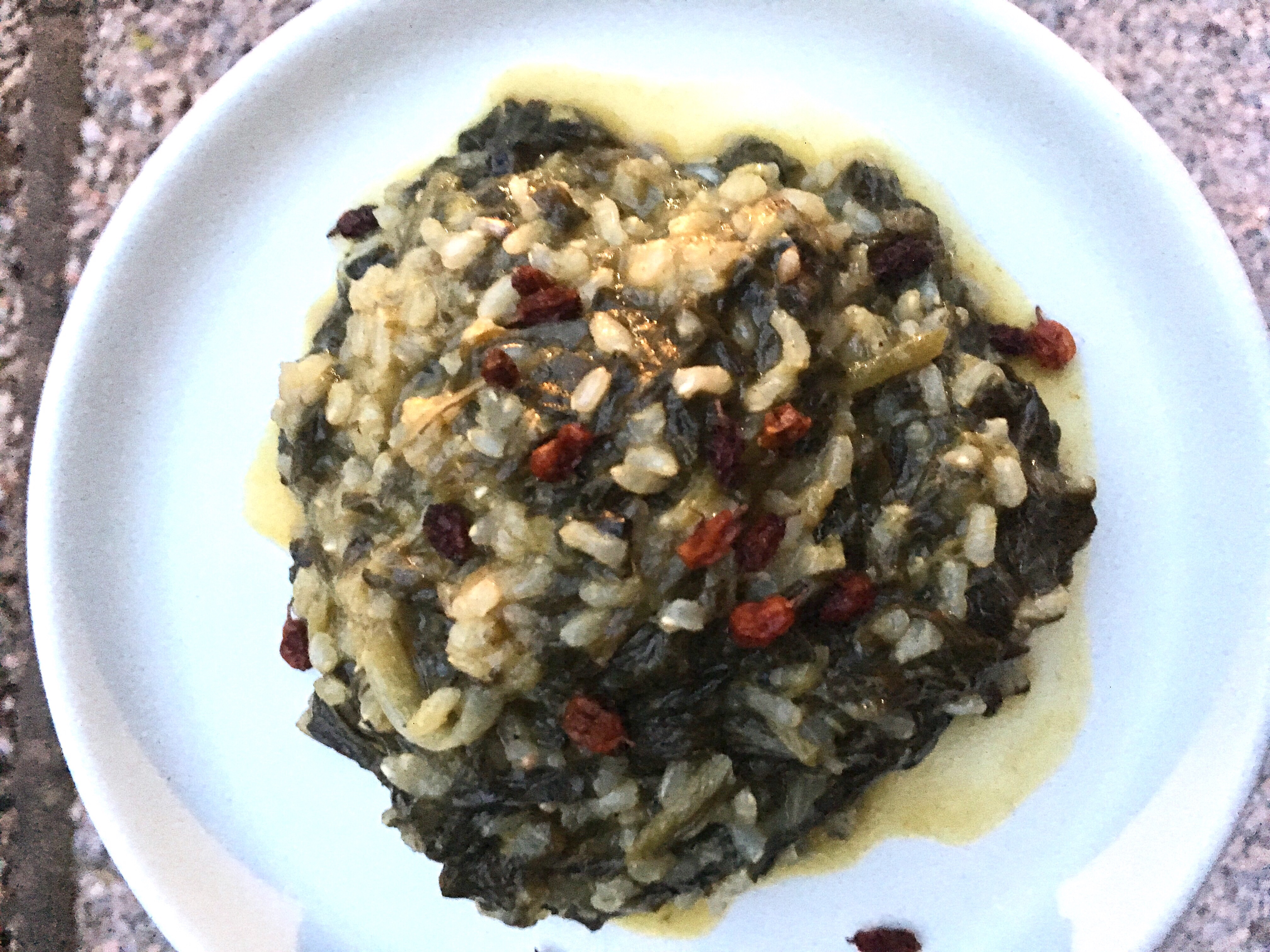
In April return to Greece for culinary inspiration. This month’s recipe is a risotto dish much loved in my homeland and to make it I am using seasonal organic Greens from Blaencamel Farm in West Wales. The key difference of this Greek risotto, called ‘Spanako-rizo’ or ‘Spanakoprasó-rizo’ is that it is less complicated in its cooking process (when compared to its Italian cousin) and it uses a lot of greens as the star ingredient rather than focussing on making a creamy rice. Whilst the rice is also added before the water it does not follow the Italian risotto method and you add all the water at once simmering the rice slowly to complete the dish.
Traditionally this dish is made with a rice called Karolina. In the UK, you can find this in Greek specialty shops, but also on the shelves of many of the Middle Eastern shops where you should seek it as Egyptian Rice. It is a short grain variety which keeps its bite when compared to Arborio. If you cannot find Karolina/Egyptian rice why not try Thai Jasmin rice which I find is a great replacement for many Greek recipes. In fact, as I am not a purist, I recommend that you try this dish with all rice varieties to find your preferred version.
Chard is regarded a wild green in Greece and has traditionally been foraged. Now cultivated widely in farms such as Blaencamel it has become a staple of our diet in the UK. Which is why I am using it together with spinach. Its meatier leaves, organic spinach, delicious Welsh leeks, foraged wild garlic and wonderful onions complete this version of the dish. In fact, Blaencamel farm’s April box will include all the ingredients you need to make your Greek Risotto. A perfect gift of the emerging Spring time and a great dish to help your body detox the heavy flavours of winter!
Ingredients (4 portions)
- 300g Blaencamel leeks (1 bunch), sliced
- 450g spinach (1 bag), roughly chopped
- 450g chard (1 bag), roughly chopped
- 1 medium onion, chopped
- 1 bunch wild garlic
- ¾ cup of rice
- Juice of one small lemon
- 1 tsp. tomato paste
- Up to 2 tsp. sea salt
- ½ tsp. black ground pepper
- 1 tbsp. sea buckthorn berries (optional)
- 1 finely chopped bunch of dill or 1 tbsp tried dill
- Extra virgin olive oil
Preparation (30 minutes)
1. Coat the base of a 20cm pot with olive oil and sauté the onion and leeks with one tsp of salt until soft and translucent.
2. Add the tomato paste and stir well.
3. Gradually add the chopped greens (spinach, chard, wild garlic) so that wilt slightly.
4. Add the raw rice and mix well.
5. If using chop the sea buckthorn berries roughly or crush and add to the rice and green.
6. Add the lemon juice, around two cups of boiling water, dill (if adding), another teaspoon of sea salt and the pepper.
7. Simmer for 20 minutes or until the water is absorbed.
8. Serve with more crushed sea buckthorn, some feta cheese and drizzle with raw olive oil.
Carrot & spinach KuKu – A seasonal Frittata
A recipe inspired by the way Iranians make their open omelette or frittata, known as Kuku. It uses March’s seasonal vegetable like carrots and spinach still abundant at Blaencamel farm and in their weekly organic vegetable boxes. This type of frittata uses a generous quantity of ingredients so don’t be surprised when you see how much vegetable goes in it – it is what sets it apart from other open omelettes.


You can find Blaencamel farm vegetables at both Farmers’ markets in Cardiff, Roath and Riverside, on Saturday and Sunday respectively, but also in Aberystwyth and their own farm shop. Order their boxes here.
Ingredients (4 portions)
- 250g (3 medium) carrots, coarsely grated
- 150g spinach, finely chopped
- 15g (half a small bunch) parsley, finely chopped
- 1 medium onion, thinly sliced
- 50g sundried tomatoes or mixed antipasti e.g. peppers and artichokes, finely chopped
- 30g cashews, chopped
- 3 Tbsp. Goji berries (optional)
- Fresh mandarin or orange juice
- 100g (half a pack) feta cheese, crumbled
- ½ tsp. ground cumin
- A generous pinch of smoked or regular sweet paprika
- ½ tsp oregano
- 1 generous pinch of saffron strands
- 2 Tbsp. flour
- 1 tsp. baking powder
- 6 eggs
- 2 generous pinches of salt
- ½ tsp. sugar
- Olive oil
Preparation (30 minutes)
- Add enough fresh mandarin or orange juice to cover the goji berries in a small bowl or mug. Infuse whilst prepping.
- Add a tablespoon (or two) of olive oil to a 20 to 25cm non-stick pan, and sauté the onion on low heat with a pinch of salt and the sugar until it caramelises (5-10 min).
- Pound the saffron in a bowl with a rolling pin, beat in the eggs and allow time for the saffron to infuse in them.
- Remove the onions from the pan, add another tablespoon of oil, add the carrots and cumin. Sauté until soft (5 min).
- Return the onions to the frying pan, add the goji berries, cashews, sundried tomatoes and antipasti. Mix well.
- Add the spinach and parsley little by little so that it slightly wilts. You don’t need to cook your spinach much or at all but you might choose to wilt it a bit of you are using a smaller pan.
- Add the flour, pinch of salt, baking powder, paprika and oregano to the eggs and beat until the flour is mixed well and to give the eggs some volume and softness.
- Mix into the pan gradually and carefully making sure the beaten egg goes to the bottom of the pan and mixes in well between the abundant ingredients to hold them together. The pan should remain on low heat all this time.
- Make sure that the ingredients are spread evenly on the pan and sprinkle the feta cheese on top.
- After firming up the frittata on the hob for a couple of minutes, you can cook the frittata in two ways: a) If your pan is heat resistant place it in a preheated oven for about 10-15 minutes at 180-200 degrees –cover with a lid or aluminium foil for half the time, or b) Cover the pan with a lid or plate. Continue cooking on the hob on low heat for 8 to 10 minutes. Then place under a preheated grill for a couple of minutes or until golden and risen.
- If using a 20cm pan it should be at least 5cm dip to make a cake like frittata that will rise.
- You can choose to omit or include ingredients on this list. It is also very easy to replace them. For example goji berries can be replaced with cranberries or even barberries if you prefer an authentic Iranian taste.
Organic Greek Leek pie
Most of the people I know in Britain talk about how much they love Greek spanakopita (spinach pie) but my all-time favourite is actually Greek leek pie (prasópita). What best way to bring together my two homes other than in this wholesome, winter recipe?
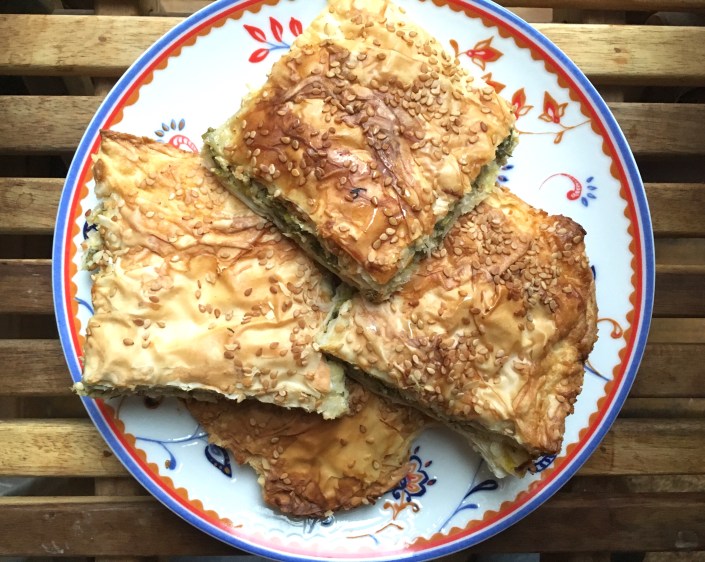
Leeks are currently in season and Blaencamel Farm’s boxes and market stalls showcase this wonderful Welsh ingredient. You can make this pie using a couple of organic bunches of leek and one onion. And you will thank me for it as the flavour of Blaencamel’s leeks is special. Every bite will make you feel nourished and shun away the winter blues. Happy pie eating!
You can order Blaencamel Farm’s boxes by contacting emailing Tom Frost mailto:(tom@blaencamelbox.com). For more info click here.
Join Lia’s Kitchen cooking classes on 3 and 10 February to find out more and savour Greek cuisine. Book here: https://www.eventbrite.co.uk/o/lias-kitchen-7901836356
Ingredients (4-6 portions or 12 pieces)
- 2 bunches Blaencamel Farm leeks (around 700g)
- 1 onion
- 200g Feta cheese
- 2 organic eggs
- 15g fresh dill (optional)
- 1 tsp. salt
- 1 tsp. sugar
- ½ tsp. ground black pepper
- 250g filo pastry (packs available at most supermarkets)
- Olive oil for cooking and pastry basting
For the glazing
- 1 espresso cup milk
- 1 tsp. butter
- 1 tbsp. sesame seeds
Preparation (up to an hour)
- Peel, halve and slice the onion finely.
- Rub the salt and sugar in the onion slices with your finger until they are well separated.
- Let the onions sweat for ten minutes.
- Meanwhile trim the leeks and halve lengthwise. Place in a basin filled with water and rinse well to remove all dirt from between the layers. Repeat at least twice.
- Coat the base of a wide pan or pot with enough olive oil and preheat. The pot or pan should have a lid.
- Add the onions and slowly fry, covered until they caramelise.
- While the onions caramelise slice the leeks finely or roughly.
- When the onion is ready add the leeks and stir fry for ten minutes on medium heat until softened.
- Remove from heat (and pan if possible) and cool down.
- In a big bowl beat the eggs lightly and crumble the feta cheese.
- Add the leeks and onion mix to the eggs and feta. Add the pepper and mix well.
- Pick a baking tray (around 36cmx40 but can be a bit bigger) and using a brush or your hands oil its base and sides well.
- Layer half the filo pastry sheets one by one (6-8 depending on the pack), lightly oiling each sheet with olive oil using a brush or your clean fingers.
- Don’t oil the last sheet and pour the leek pie filling spreading it evenly across the tray with the back of a spoon.
- Repeat the layering process over the filling.
- Heat up the milk and butter in a small pot until the butter melts.
- Pour on top of the pie, starting from its edges but making sure that the full surface of the top sheet is also moistened. Tuck the corners in to seal the pie.
- Using a sharp knife slice the pie into twelve portions.
- Sprinkle the sesame seeds and bake in a medium oven (180 Celsius) for 30-45 minutes until golden.
Blaencamel Farm’s Cima di Rapa & greens in coconut sauce

Cima di rapa is a star ingredient grown organically in our very own patch by the fantastic Blaencamel Farm this January. It is a broccoli sprouting (Broccoli raab/Rapini) loved in Southern Italian/Puglian cooking, typically in anchovy and butter sauce combinations and served with orecchiette pasta. Together with the other greens offered in Blaencamel vegetable boxes and at farmers’ markets this January, Cima di Rapa has inspired a Lia’s Kitchen dish that takes me back to my Greek – greens – loving roots but also uses coconut milk, an ingredient I have come to love through my travels in India and Cambodia. Good and ample sea salt is essential for your recipe, as Cima di rapa loves a salty kick.
Ingredients (4 portions)
- 700g mixed Blaencamel farm greens, such as 2 bunches of Cima di Rapa, half a bag of spinach and half a bag of winter sproutings
- 5-10g peeled ginger (size of the top of your thumb)
- 1 big peeled garlic clove
- 1.5 cups of coconut milk for drinks OR 1 tin of coconut milk for cooking (400ml)
- 4 tbsp. coconut oil, if using coconut milk for drinks OR 1 tbsp. coconut oil, if using tinned coconut milk for cooking
- 1 heaped tsp. Oliveology’s truffle salt or Pembrokeshire Beach company Seaweed Salt
- 1 heaped tsp sea salt
- A pinch of chilli flakes (optional)
- 1 tsp Pembrokeshire Beach Company Kelp Seaweed (optional)
* You can source Pembrokeshire Beach Company products at Penylan Pantry.
Preparation (20 minutes)
- Wash all the greens really well. To ensure all dirt is removed leave the greens in a bowl or basin for around 10 minutes after the first wash.
- In a big pot add enough boiling water to cover the greens (stalks included) and boil for around 10-15 minutes on low heat, or until the stalks are cooked.
- Whilst the greens are cooking, heat the coconut oil and fry the ginger and garlic for a few minutes (roughly chopped in 2-3 three chunks each).
- Then add the coconut milk of your choice, the specialty salt and the kelp seaweed salt and chilli flakes if you are using.
- Lower the heat and simmer the coconut sauce for 5-10 minutes or until the greens are cooked.
- When the greens are ready, drain them keeping the liquid from the boiling process. You can use the liquid to boil pasta or noodles in it (if that’s a serving preference) and you might need a little bit of the liquid to thin the sauce of the dish, particularly if you are using tinned coconut milk.
- Return the greens in your big pot and pour the thin coconut sauce over them, simmering for another couple of minutes.
- If the coconut sauce has thickened use some of the liquid (kept after draining) to thin it. This is a dish for which you should have a runny, thin sauce to serve the greens in. The end result should be something between a thin soup and a stir fry.
- Cool down for 5 minutes and serve with bread or noodles to enjoy the flavoursome and nourishing sauce.
Wild garlic foraging and nettle pie
Every year between end of March and May, I look forward to the ‘hungry gap’ in Wales, when shaded areas under tall trees fill with wild garlic and tender nettle tops that beckon picking.
It’s nothing like a hungry gap for me. I fill my house and belly with greens and nourish myself in tune with the season. And as my knowledgeable friend Gaby tells me possibly help give my liver a bit of a break…
Being in Wales has not stopped me rediscovering and connecting to my Greek roots all these years. I looked around me to see many good raw ingredients here too. I started being more creative and appreciating what wonderful people produce and offer around me here, creating my own cuisine. And of course I keep bringing many treasures back from Greece when I can…or when I meet amazing people who source quality products from home no 1.
Here’s a video sharing how in my life when Greece meets Wales beautiful things get cooking. Enjoy and come on in my kitchen …
Poached eggs with avocado and chilli potatoes
You don’t need to wait for the weekend for this beautiful dish. It’s a great light midweek dinner or lunch as well as the perfect weekend brunch.
 We live in the age of avocado craze so admittedly this is not the first time you see a recipe like this one. But I was asked to blog the recipe by one of my followers when I posted a photo on social media…and here it is.
I love using potatoes instead of bread but sourdough or other bread is a great alternative if that’s what you have handy.
Poached eggs are an absolute treat for me but if you like scrambled or fried don’t let me stop you.
And Dukkah, the Egyptian spice condiment the recipe for which is on my blog, lifts flavours and as another page follower said ‘makes everything taste better’. So maybe have a go at making it this week.
I love smoked salmon with avocado but you can easily omit it and replace with anything you fancy, for example sundried tomatoes work really well with this dish, as does chorizo and other spiced sausage if you are a carnivore.
Ingredients
Feeds 2
- 2-4 eggs, depending on your hunger
- 1 avocado, halved and thinly sliced
- 170g new potatoes
- 60g smoked salmon, half a packet
- Half a lime
- 1/4 tsp chilli and garlic paste or 4 drops of Tabasco sauce
- A few slices baby plum or cherry tomatoes
- Salt
- Olive oil
- White vinegar
- 1/2 tsp Dukkah spice mix
Preparation
30 minutes
- Wash and quarter the new potatoes (skin on) and simmer for 10 minutes, till cooked.
- Drain and mix in a bowl with the chilli sauce, a pinch of salt and a careful splash of olive oil.
- Squeeze the lime juice on top of the avocado slices and sprinkle carefully with a bit of sea salt.
- Slice the smoked salmon into thin slices.
- To poach the eggs bring a pot of water to the boil.
- Add a tablespoon of white vinegar.
- With a fork or spoon stir quickly in the middle to create a whirlpool and quickly crack an egg into its centre.
- Simmer for 3-5minutes for a runny poached egg or a bit longer if you like it firmer.
- Cook one egg one at a time.
- Serve the egg(s) on a bed of potatoes, topped with the salmon strips and the avocados on the side.
- Add sliced baby tomatoes on the avocado if that takes your fancy.
- Sprinkle the dish with the Dukkah spice mix or a bit of salt.
Lia’s Tips:
- You can also add more mild chilli sauces of your choice like Cholula or the coriander chilli sauce from Blaencamel market stall in Cardiff.
- A dollop of yoghurt is mighty fine with this dish too.
The Carrot and Cumin soup that stole your heart
MDuring Love Food Hate Waste Project 2016 (roadshows and workshops included) there was one soup that definitely stole everyone’s heart both in terms of taste and simplicity of preparation.
An easy recipe to help you use that bag of carrots you bought when you really only needed a couple. Nutritious, warming and satisfying it is versatile in its use of pulses, I actually make it with yellow split peas more often than with red lentils, but if you are in a rush lentils are a better option. If you do not have ras-el-hanout spice mixture you can increase the cumin dose, add some paprika, ground coriander, a pinch of chilli powder and a squeese of lemon. Fresh coriander or spinach complements the recipe very well. The use of almond milk is in my opinion what really makes this soup (use sweetened). And if you serve with toasted almonds it and coriander pesto you have a luxury version to indulge in.
Enjoy!
Ingredients
Makes 2.5lt soup or 6 portions for main
- 700g carrots
- 350g red lentils or split yellow peas
- 2.5 litres stock
- 250ml almond milk
- 2 tsp cumin seeds
- 1 pinch chilli flakes
- 1.5 tsp Ras El Hanout spice mix
- Salt
- Olive oil
- Fresh coriander or spinach (Optional)
Preparation
45minutes
- Wash carrots well with a vegetable brush and chop finely.
- Coat the bottom of a pot with enough olive oil.
- When hot add the cumin seeds and chilli flakes and fry for a few
- Add the carrots, with a couple of pinches of salt and stir fry for
- Add the lentils and Ras El Hanout and stir well until well coated
- Add the stock, bring to the boil and simmer for 20-30 minutes.
- Remove from the heat, add the almond milk and blend to a creamy
- Add the chopped spinach and/or coriander for a soup that will make you as strong as Popeye!
Lia’s Tips: Mix parsnips or potatoes with carrots to use up leftover vegetable. This soup is great with split yellow peas. Served with pesto and nuts it is a very filling meal. Serve with savoury muffins or toasted stale bread or croutons.
Chicken Giouvetsi with Preserved Lemons and Orzo Pasta (Channel 4- The Food Chain)

One late autumn Friday afternoon, as I was writing recipes inspired by Welsh ingredients and my Greek home, I received a call from a lovely man called Jonathan, asking very specifically about my preserved lemons recipe. ‘Would you be willing to be filmed preparing preserved for our TV programme?’ he asked, ‘And what about sharing a recipe that uses preserved lemons?’ My answer of course was YES! And tonight, on 21 March 2016, you can see me do that at 8.30pm on Channel 4 when the first episode of The Food Chain kicks off starting with the ingredients of Apple & Salt, grown and produced in the UK and travelling to your plate through our stories and recipes.
It would suffice to say that coming from Greece I use only sea salt for cooking! So it has been a great relief that there are still some great businesses in the UK that produce fantastic sea salt for us. Using sea salt definitely adds to the flavour of food and I believe that its health benefits are much greater for all of us. So now you know what ingredient I will be using!
For those keen cooks who would like to try the recipe on the Food Chain Programme, you can find my preserved lemons recipe here, and below is an adapted version of my Παππού/Pappou’s (Grandad in Greek) Giouvetsi recipe which uses preserved lemon and my beloved spice of cinnamon.
Enjoy! And Καλή Όρεξη/Kalee Oreksi!
Follow us on Twitter: @liaskitchen, Like us on Facebook: http://www.facebook.com/liaskitchen, Look at our photos on Instragram: @lias_kitchen
Ingredients (feeds 4-6)
- 1kg chicken thighs and drumsticks (skin on)
- 2 onions, finely chopped
- ½ preserved lemon, flesh removed and finely chopped
- 1 tsp sweet paprika
- 1-2 tsp sea salt
- 1-2 cinnamon sticks
- 500g orzo pasta/κριθαράκι
- 5 whole allspice or pimento berries
- 6 garlic cloves
- 2 tbsp. tomato paste
- 1 heaped tsp oregano
- ½ tsp black pepper
- 1 tsp sugar
- Up to 1lt stock
- Additional sea salt to taste
- Extra virgin olive oil
- Fresh, chopped parsley (optional)
Preparation (1.5hrs in total)
- Place the chicken, preserved lemons, paprika and half of the garlic crushed in a bowl with a couple of glugs of olive oil and 2 tsp of salt.
- Mix well, cover and leave aside to marinade for at least half an hour (or overnight in the fridge if you prepare the day before for extra flavour).
- In a casserole dish or oven tray with a lid, which is suitable for oven use, preheat olive oil on the hob, enough to coat its surface.
- Brown the chicken pieces well on all sides taking care not to burn.
- Before the process finishes add the finely chopped onions, the cinnamon stick and the pimento/all spice berries and sauté with the chicken for flavour and until just soft.
- Add the tomato paste stirring well to dissolve, additional garlic, dried oregano, pepper, sugar and finally at least 750ml of the boiling stock.
- Cover with the lid and place swiftly in the oven cooking on high heat for ten minutes.
- Cook for an additional thirty minutes on medium heat.
- Then remove from the oven to add the orzo pasta, stirring in carefully so as not to ‘break’ the chicken flesh.
- Return to the oven and cook on medium heat for another 20 minutes checking whether you need to add an additional 250ml of stock for the past to cook (particularly if the pasta has ‘drunk’ most of the water and is still quite tough)
- Let the dish sit for 15-20 minutes and serve with fresh parsley if you prefer that.
 Lia's Kitchen
All you need is love … and chocolate coated, caramel almonds
Posted on Updated on
Happy St Dwynwen’s Day you lovely people! So proud that in Wales we have a lady patron of love.
Last week the amazing We Are Cardiff blog asked me to develop a recipe for them! And here it is together with the full blog.
wearecardiff.co.uk/2017/01/23/all-you-need-is-a-love-inspired-recipe-for-saint-dwynwens-day/
Remember to find out more about Greek food join one of Lia’s Kitchen intimate cooking classes on 3 and 10 February. I will be introducing participants to Greek Kitchen basics but will also be sharing Greek flavours and recipes that are not yet widely known in the UK. You can book online here www.eventbrite.co.uk/o/lias-kitchen-7901836356.
Or contact Lia for more information at lia@liaskitchen.com.
Share this:
This entry was posted in Comment, Greek cuisine, Recipes, Vegan, Vegetarian and tagged Cardiff, chocolate recipes, greek food, Lias Kitchen, love, st dwynwen's day, wearecardiff.